

INTREP360 INTELLIGENCE REPORT
05.27.2006: TRUMP DIPLOMACY FAIL

May 27th, 2026
Greetings! It’s hump day again.
Last week was a bad week for Team Trump’s diplomatic efforts.
President Donald Trump’s ‘America First’ narrative has both allies and adversaries questioning U.S. commitment if a better ‘deal’ can be made elsewhere.
Cases in point:
Ukraine: Secretary of State Marco Rubio announced that the United States was pulling out of trilateral talks.
Islamic Republic of Iran: U.S. ceasefire negotiations to reopen the Strait of Hormuz and deny Iran the ability to enrich uranium and acquire a nuclear weapon.
Taiwan: Trump decision to sell weapons to Taiwan after his Beijing summit.
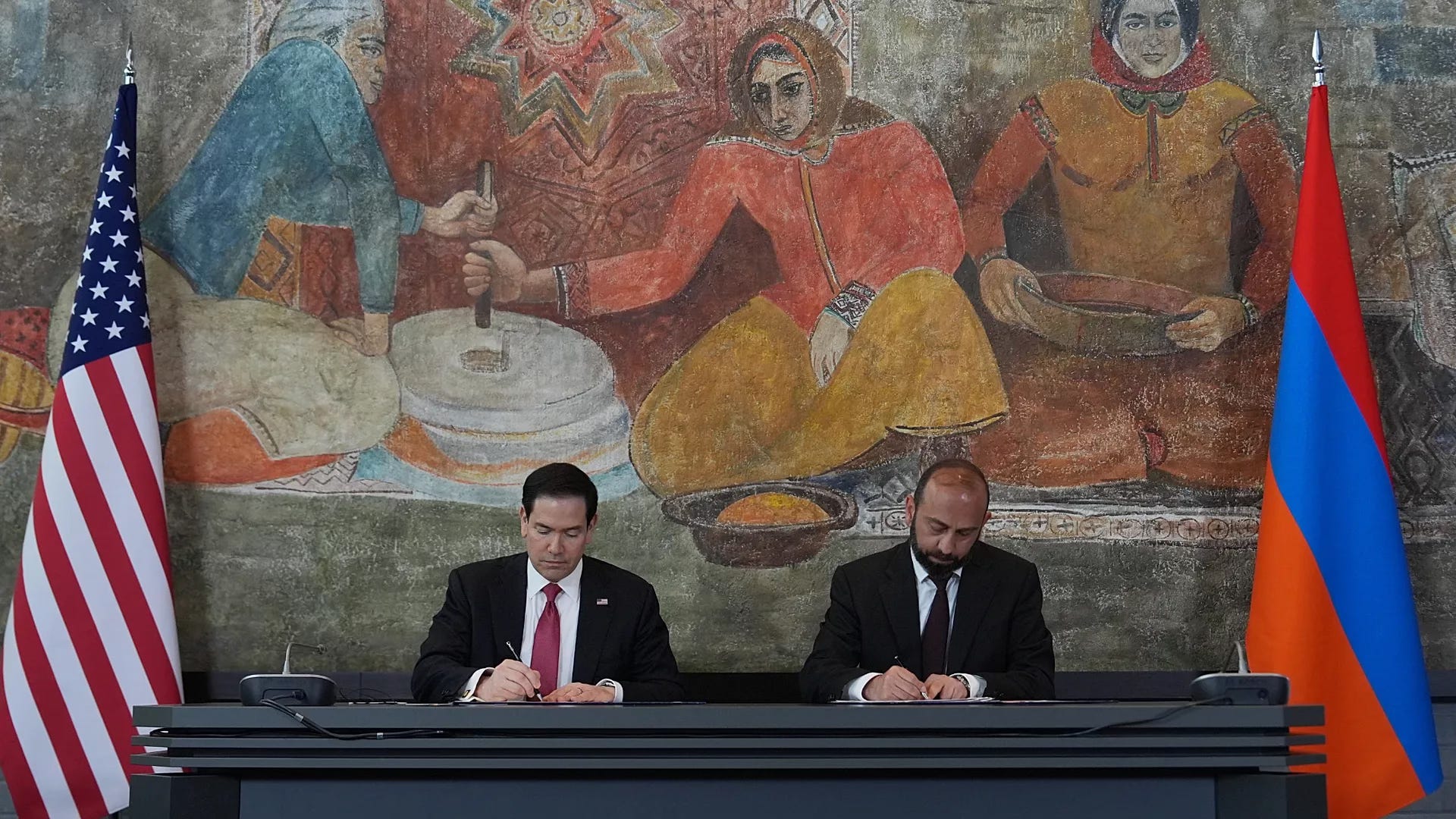
Photo Credit: AP Photo. US and Armenia pledge to move forward on economic corridor during Rubio visit.
This week isn’t shaping up to be much better.
Even Russia can’t trust the U.S. as Armenia “officially exited Moscow’s orbit” and entered a strategic partnership with the U.S. yesterday. Rubio and Armenian Prime Minister Nikol Pashinyan signed an agreement in Yerevan under the American TRIPP initiative, as well as a memorandum on the supply of rare minerals.
Let’s take a closer look.
***
UKRAINE
Last week, Rubio told reporters that U.S. efforts to “broker peace talks between Ukraine and Russia had stalled” and that the U.S was stepping away.
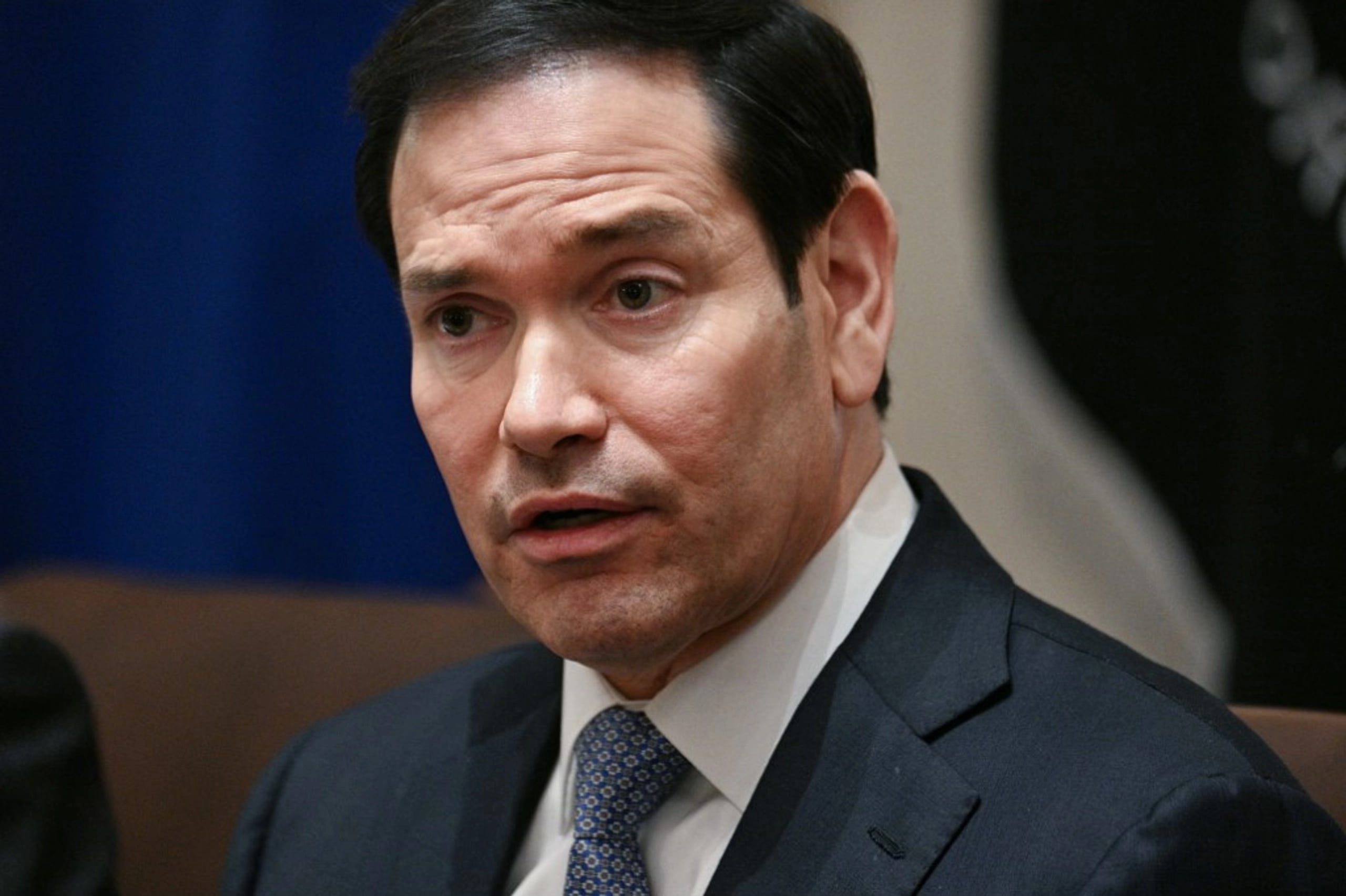
Photo Credit: Jim Watson / AFP. US Secretary of State Marco Rubio during a cabinet meeting at the White House on March 26, 2026 in Washington, DC.
According to Rubio, “We just sort of sensed that there wasn’t a lot of progress being made. We’re also not interested in getting involved in an endless cycle of meetings that lead to nothing.”
Zelensky’s Chief of Staff, Kyrylo Budanov, acknowledges the impasse, stating “We are looking for a compromise between two completely polar positions. We have not yet found it.”
And Rubio is correct – there hasn’t been a lot of progress being made. But then again, Special Envoy Steve Witkoff and his side-kick Jared Kushner haven’t paid Ukraine much interest either.
As Ukrainian President Volodymyr Zelensky noted, Witkoff has been to Moscow eight times and met with Russian President Vladimir Putin on multiple occasions; however, “Neither he nor Kushner have ever visited Kyiv in an official capacity. It’s disrespectful [for them] to come to Moscow and not Kyiv, it’s just disrespectful.”
Why? Russia has more to offer. To begin with, a $14 trillion portfolio of potential U.S.-Russia projects that Putin Envoy Kirill Dmitriev put on the table in February – and has sweetened several times since.
Only Trump can’t get Zelensky – or his European supporters for that matter – to submit to Putin’s maximalist demands.
And while Rubio insists that “stories out there about [the U.S.] forcing the Ukrainians to take this position or that position, are not true,” Russian maximalist demands – repeated by Witkoff and Kushner – are the stumbling block. Specifically – the Russian demand that Ukraine withdraw its military forces from the entire Donbas region (the Donetsk and Luhansk oblasts) as a non-negotiable precondition for any meaningful peace talks or a ceasefire.
U.S. actions suggest otherwise. The most egregious include:
The U.S. Defense Department announced plans to withdraw 5,000 troops from Germany after a heated discussion between Trump and German Chancellor Friedrich Merz over the war with Iran.
The Pentagon abruptly cancelled a planned nine-month rotation of 4,000 soldiers from Ft. Hood, TX – the U.S. Army’s 2nd Armored Brigade Combat Team – to Poland.
Alexander Velez-Green, a Defense Department official, notified NATO allies that the Pentagon is substantially scaling back forces – the NATO Force Model – it plans to send to Europe in the event of a crisis. The goal is “to reduce by one-third to one-half the pool of various military capabilities it would devote to NATO in a conflict, including U.S. commitments of strategic bombers and other long-range strike forces, some naval assets and air-to-air refueling tankers.”
The White House cut direct U.S. aid – new U.S. government-funded military, financial, and humanitarian packages – to Ukraine by 99% in 2025.
Europe was able to cover the tab though, increasing their aid allocations by 59 percent for financial and humanitarian aid, and 67 percent for military aid. Military aid came in the form of the Prioritized Ukraine Requirements List (PURL) initiative, which allowed NATO member-states to purchase weapons and munitions from the U.S., ensuring a flow of select military equipment to Kyiv.
PURL helped keep Ukraine in the fight, and Russia took notice. Putin has blamed Europe for sustaining Ukraine’s war effort, and the Kremlin uses that claim to cast European countries as aggressors prolonging the conflict and undermining negotiations.
At the end of Rubio’s press conference he told reporters “The U.S. remains ready to re-engage if future talks become productive.”
That isn’t likely to happen though. On Sunday Russia launched one of its largest bombardments on Kyiv– 600 drones and 90 missiles, which included the Oreshnik intermediate-range ballistic missile.
But Ukraine is winning on the battlefield – and as a result, peace talks are no longer a Russian priority. As we stated in the Kyiv Post, “Kyiv no longer asks permission to strike targets in Russia with Western weapons – they use their own manufactured weapons (Fire Point 1/2/5 & 7/9) to enforce Ukrainian sanctions” and to sever Russia’s ability to sustain their forces in Crimea.
***
THE ISLAMIC STATE OF IRAN
At the risk of sounding like a broken record – the U.S. pursuit of a ‘deal’ with Iran may come at the expense of Gulf Nation states, Israel, and the Iranian people.
The President and his negotiation team of Witkoff & Kushner are focused on two conditions – enriched uranium (a.k.a. – no nuclear weapons) and the reopening of the Strait of Hormuz.
That may scratch the itch for the White House, but any deal with Iran leaves the Islamic Revolutionary Guard Corps (IRGC) – specifically, Maj. Gen. Ahmed Vahidi – in control of the country.
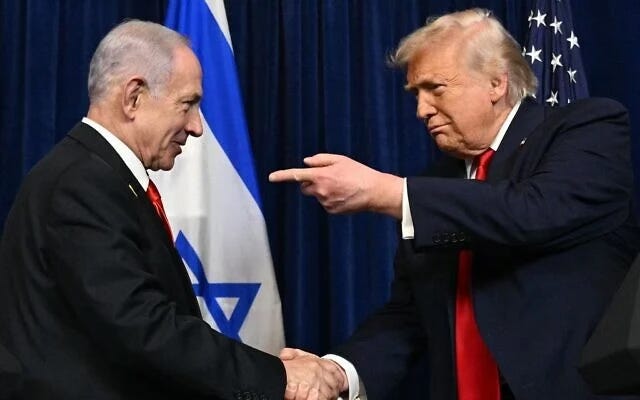
Photo Credit: Jim WATSON / AFP. US President Donald Trump (right) and Prime Minister Benjamin Netanyahu shake hands during a joint press conference at the Mar-a-Lago residence in Palm Beach, Florida, December 29, 2025.
Israeli Prime Minister Benjamin Netanyahu reportedly told confidants in private conversations that Israel has little ability to influence Trump’s decision-making on Iran as the U.S. negotiates a deal. But they do have the means to act on their own national security interests – and do, actively targeting Hamas and Hezbollah leadership and fighters.
Until Iran provides proof of life for Supreme Leader Mojtaba Khamenei – Vahidi has the conn, not whoever Witkoff & Kushner are negotiating with. As we said in last night’s INTREP360 Intelligence Report: Team Trump is getting played.
Allowing the IRGC to remain in power is a recipe for a ‘forever war’ in the middle east. Yes, the Iranian Navy and Air Force have been destroyed, but their asymetric capablities – ballistic missiles, drones, speedboats and support to proxies – remains intact. As does the Basij paramilitary force – which violently keeps the Iranian people in check and the IRGC in power.
As we reported in the May 19th edition of the INTREP360 Intelligence Report, Iranian lawmaker Ali Khezrian, who sits on the Majlis National Security and Foreign Policy Committee, has foreshadowed what the region will likely experience if the IRGC is allowed to remain in power — threatening the United Arab Emirates, reminding them that the U.S. will eventually leave the region and Iran will “put them through hell.”
That threat likely extends to all of the member states of the Gulf Cooperation Council (GCC).
Contrary to the President’s Truth Social post – negotiations with the Islamic Republic of Iran are not proceeding nicely. It’s ‘one step up and two steps back,’ with Iran leading the dance.
IRGC forces continue to launch attack drones at U.S. Navy ships and attempt to lay mines in the Strait while the White House continues to assert that “the attacks were limited and do not represent a resumption of major combat operations against Iran.”
Until one gets through.
And now the President is trying to pressure Muslim-majority nations to join the Abraham Accords if they want to participate in a developing Iran agreement – nearly 50 days into a ceasefire and negotiations with Iran.
Acting in the best interest of the U.S. is always job one for the President, but unilateral diplomacy won’t win over many allies.
***
TAIWAN
And then there is Taiwan.
U.S. legislators approved an arms package for Taiwan in January worth up to $14 billion, but according to a senior U.S. military official, that sale has been put on “pause,” fueling concerns among lawmakers and Taiwanese officials that “Trump’s support for the democratically governed island is wavering as he juggles a Middle East war and a desire for détente with Beijing.”
The exact contents of the arms package remains unclear, but likely includes Patriot Pac-3 MSE missile interceptors and High Mobility Artillery Rocket System (HIMARS) launchers and munitions.
The Washington Post reported that during “the U.S.-China summit last week, Beijing shared its displeasure with the weapons sales and Chinese officials have privately conveyed to the U.S. side that they would prefer packages be delayed and scaled back”
Trump confirmed he discussed Taiwan arms sales with Chinese leader Xi Jinping, and dismissed a decades-long U.S. agreement to not consult with Beijing on such matters. Trump also said he had yet to decide on future packages, describing the weapons deals as a “very good negotiating chip.”
The President appeared to treat Taiwan, a U.S. ally, as a bargaining chip and brushed aside the restrictions of the Six Assurances, a four-decade-old framework that defines U.S. commitments to Taiwan.
No decision has been made, and Trump still has not spoken with Taiwanese President Lai Ching-te, despite saying he would after the Beijing summit.
***
As we stated on the front end of today’s INTREP360 Intelligence Report, Trump’s ‘America First’ narrative has allies questioning U.S. commitment if a better ‘deal’ can be made elsewhere.
Ukraine, Israel, the GCC states, NATO, Iranian citizens and Taiwan have all been ‘thrown under the proverbial bus’ for the betterment of U.S. interests.
It’s hard to keep allies like that – or expect them to support you in your time of need.
The White House should heed the wise council of the African Proverb, “If you want to go fast, go alone. If you want to go far, go together.”
***
ICYMI - Mark was back on Al-Qahera News this afternoon discussing the on-going negotiations with Iran.
Watch it here: https://youtube.com/shorts/kwTEo9b8k58?si=GtbhRxFc1eWeUYV7
***
Thank you for reading. We will see you tomorrow. Please subscribe, comment & share. We truly appreciate it!
Jon & Mark
Follow Jon on X at @JESweet2022 or on Bluesky at @JonSweet.bsky.social. Follow Mark on X at @MCTothSTL or on Bluesky at @MarkToth.bsky.social.
Good analysis. Unfortunately, we have no idea of how to remove the IRGC from power. Starting a war first and trying to figure that out later was a huge impulsive mistake. Trump was conned by Bibi.
Looking out for America's best interest?
Or Trump and family's best interest?