

INTREP360 INTELLIGENCE REPORT
04.20.2026


Greetings!
Ticktock, ticktock … that’s the sound of the clock ticking towards the ceasefire’s expiration set for Wednesday, April 22nd.
On Sunday, Iran’s parliamentary speaker, Mohammad Bagher Ghalibaf, said that the Strait of Hormuz will remain closed “if the U.S. does not lift the blockade.”
President Donald Trump said today that he was “under no pressure whatsoever” to make a deal with Iran after the regime said it had no plans to attend peace talks in Pakistan.
But this is much more than just about a naval blockade or enriched uranium – this is about a regime that has overstayed their welcome.
As of this evening, neither side has sent their delegation to Islamabad, Pakistan to take part in the second round of negotiations.
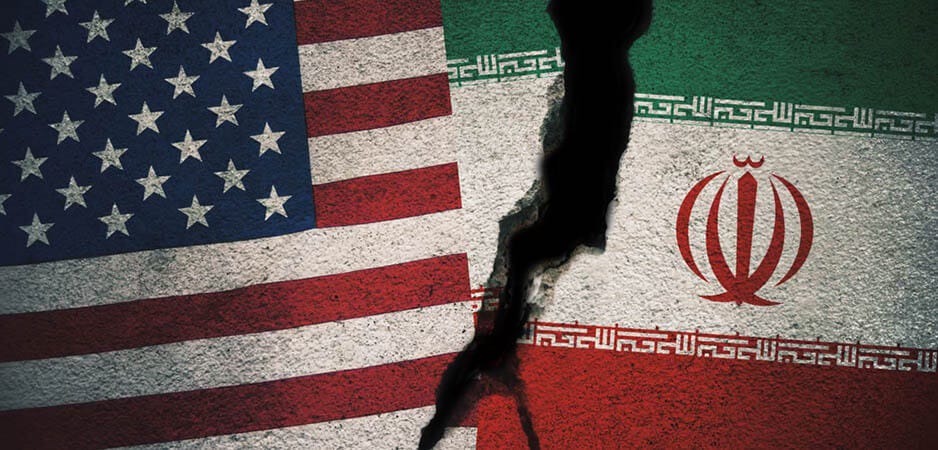
It looks as though we have come to an impasse.
Iran has overplayed their hand – and the hammer may be about to drop.
***
During an interview on Al-Qahera News – an Egyptian news channel – on Sunday, a comment from another guest panelist caught Jon’s attention. He was hopeful the second round of negotiations between the U.S. and the Islamic Republic of Iran would take place and that the two sides could agree upon an acceptable framework for the next round of negotiations.
The next round?
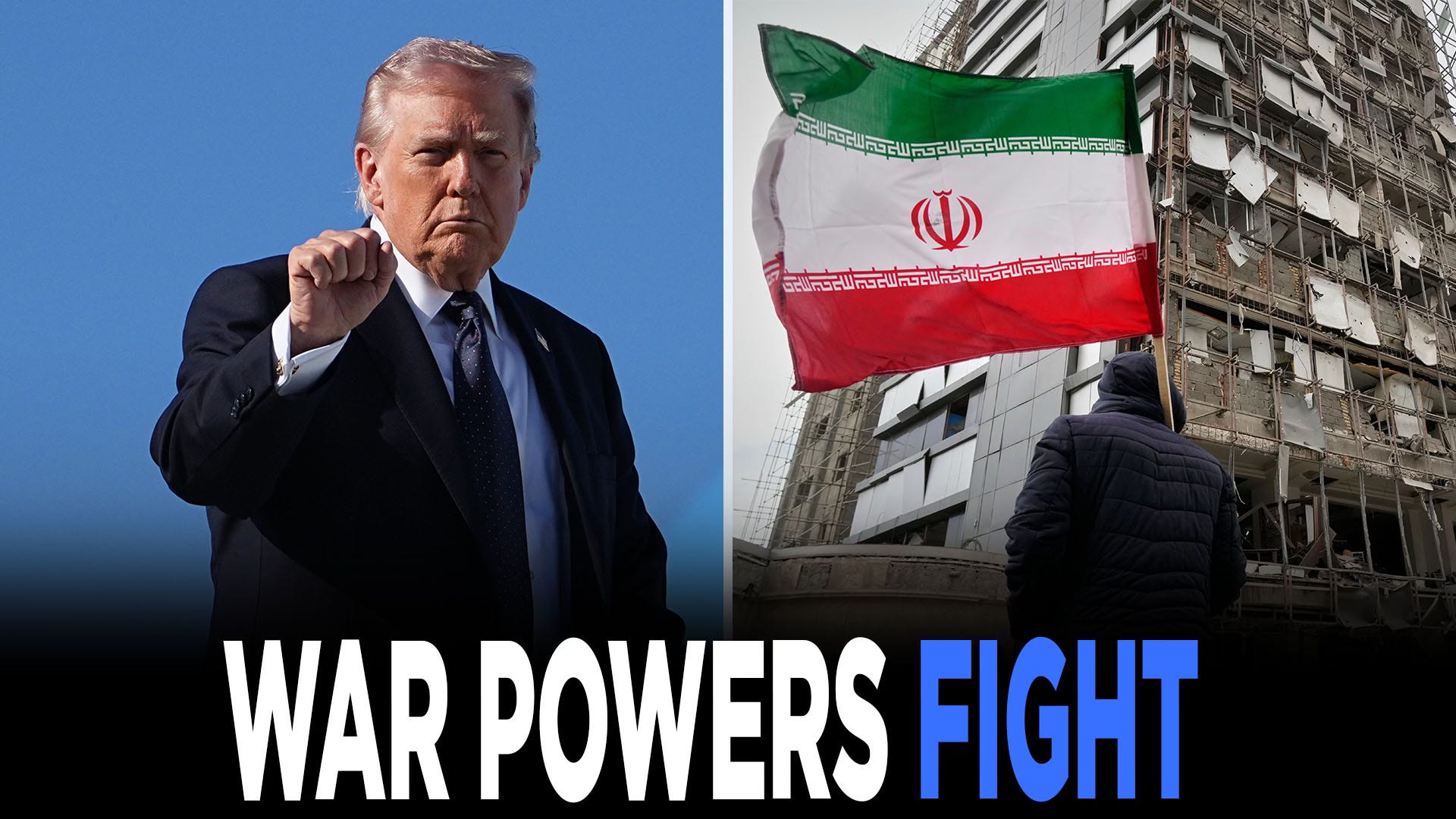
That would mean extending the current ceasefire and providing Iran more time to reset, reorganize, and more importantly – time for the War Powers Resolution 60 day suspense to expire.
Iran is almost certainly aware of the “automatic termination of the use of U.S. forces engaged in hostilities 60 days after the President has reported (or was required to report) on the use of force” provision contained in the War Powers Resolution, and likely believes this to be their lifeline.
Iran’s plan may be to negotiate an acceptable framework for follow-on negotiations, hoping Congress votes to terminate the use of U.S. forces.
The clock is ticking – and they know it.
That day is on or about 28 April – just 8 days.
***
So, more of the same is likely for round two in Islamabad, Pakistan, IF the U.S. and Iranian delegations meet – to buy more time.
Send negotiators to Islamabad, tell team USA what they want to hear, then have the IRGC balk again when the President makes an announcement that a deal has been made.
As we said in our Special Edition INTREP360 Intelligence Report on Saturday – that has become Iran’s strategy: humiliation. “The tactic is simple. It is designed to play to Trump’s Achilles’ Heel – his ego – as a scheme to buy time and create negotiating leverage.”
It is an effective technique that Trump critics seem more than willing to embrace - it creates doubt, which leads to a lack of confidence in the President’s decision making, further divides his support within the Republican Party, and alienates Washington from their NATO and Gulf Nation State allies – all while buying time for the regime’s survival.
And the President does all the work.
***
The proof is in the pudding.
Last Friday the President said he could trust the Iranians, telling ABC News chief Washington correspondent Jonathan Karl that, “I think they’ve had it. I think they’ve had enough.”
That same day he confidently told Americans that the Islamic Republic of Iran had “accept everything” the White House demanded. And that “Iran has agreed to never close the Strait of Hormuz again. It will no longer be used as a weapon against the World!”
Only they did not. At least that is what Iran’s Foreign Ministry spokesperson Esmaeil Baghaei would have you believe – that they never made any agreements with Washington.
Problem was, whoever told the President what he wanted to hear, did not have the authority to make those decisions.
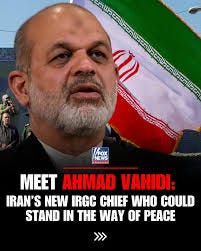
The Institute for the Study of War (ISW) reported this on Saturday:
“Islamic Revolutionary Guards Corps (IRGC) Commander Major General Ahmad Vahidi and members of his inner circle [had] likely secured at least temporary control over not only Iran’s military response in this conflict, but also Iran’s negotiating position.”
And that the “IRCG’s consolidation of control over Iranian decision-making indicates that the Iranian political officials currently negotiating with the United States do not have the authority to independently determine Iran’s negotiating positions. The IRGC appears to have sidelined more pragmatic figures with what the United States has negotiated.”
***
As we stated in Thursday’s INTREP360 Intelligence Report – “suspenses drive decisions, and eventually action.”
Iran believes time is on their side – and that they can dictate their demands to a White House seemingly in search of an off-ramp.
After withstanding 38-days of airstrikes against over 13,000 targets – Trump has essentially put Vahidi in the driver’s seat and given control of the Strait of Hormuz to the IRGC.
Or not.
***
April 22nd and April 28th will determine the outcome of this war.
***
The White House should heed the advice of retired U.S. Army General Jack Keane and former United Nations Ambassador and Assistant to the President for National Security Affairs (NSA) John Bolton, each of whom have cautioned that “you can’t trust Iran.”
The President has learned that the hard way.
The White House also needs to acknowledge that the IRGC is running the country. Iranian Foreign Minister Abbas Araghchi, President Masoud Pezeshkian, and the Speaker of Iran’s ParliamentMohammad-Bagher Qalibaf have no authority.
Negotiations must be directly with the IRGC – cut out the middle man.
Iran needs to understand they are not on equal terms. This is not a deal-making event; rather, a non-kinetic opportunity for the regime to relinquish power, surrender their enriched uranium, terminate their nuclear weapons, ballistic missile and drone programs, defund their proxies, and relinquish control of the Strait of Hormuz.
Time is up. In essence, must be the “unconditional surrender” Trump called for in March.
Iran should be told that forces are in place and prepared to execute the next phase of U.S. Central Command’s military campaign at the President’s order.
The IRGC cannot remain in power, they cannot continue to threaten their Gulf State neighbors, Israel, the U.S., and their own citizens, nor can they exercise control or influence over the Strait of Hormuz – an international waterway.
In mythological terms - they are the head of the Hydra.
While the President may believe Operation Epic Fury has resulted in regime change – it has not. The IRGC – the regimes’s center of gravity – remains firmly entrenched in power.
They are the disease – enriched uranium, ballistic missiles, drones, proxies, and everything else are just the symptoms.
The President needs to finish what he started – and make winning the American way again.
Gen. George S. Patton made that clear when he said, “Americans love a winner and will not tolerate a loser. Americans play to win all the time … That’s why Americans have never lost and will never lose a war. The very thought of losing is hateful to America.”
***
Mark was back on Al-Qahera News this afternoon to discuss the likelihood that the U.S. - Iran negotiations would take place.
Watch it here:
https://youtube.com/shorts/ZUaU4XwKbIU?si=Tl15BsrlVNAu5pXr
***
Thank you for reading. We will see you Monday. Please subscribe, comment & share. We truly appreciate it!
Jon & Mark
Follow Jon on X at @JESweet2022 or on Bluesky at @JonSweet.bsky.social. Follow Mark on X at @MCTothSTL or on Bluesky at @MarkToth.bsky.social.
This reminds me of incident, Pakistan is trying to be the designated driver, the responsible one. Iran is the friend who is full of courage and liquor picking a fight with the bouncer at your local bar. Not a good decision for Iran.
Well, Patton was wrong...we have lost a war.
And Iran to surrender unconditionally? Highly unlikely.
And if they don't...to accomplish all the objectives? Won't be much left. Kind of like the Palestinians.