

INTREP360 INTELLIGENCE REPORT
06.03.2026: IRAN GOES ON OFFENSE

June 3rd, 2026
Greetings!
It is getting hot in Kuwait. Not just the temperature which reached a high of 103 degrees today in Kuwait City but also due to a new volley of Iranian airstrikes in violation of the fragile ceasefire between the U.S., Israel and Iran.
For the third time in five days, the Islamic Revolutionary Guard Corps (IRGC) has attacked Kuwait. Today’s strike heavily damaged Terminal 1 at the Kuwait International Airport, killing one and injuring 63 people.
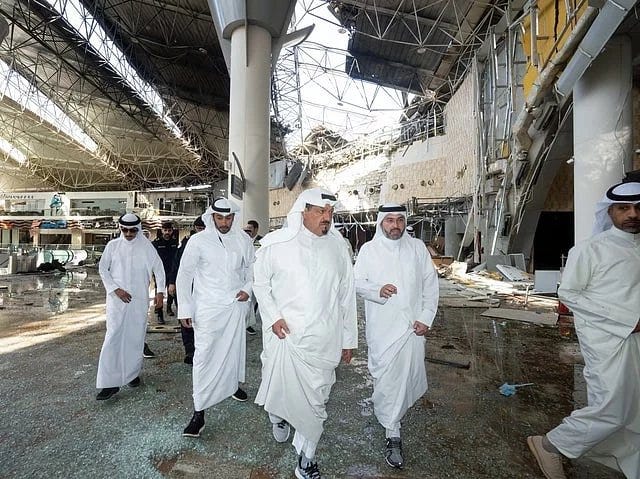
Photo credit: AFP. Kuwait’s Prime Minister, Sheikh Ahmad Abdullah Al Ahmad Al Sabah, visited Terminal 1 at Kuwait International Airport on June 3rd, 2026.
The IRGC is claiming that the recent strikes are in retaliation for multiple U.S. strikes on Qeshm Island in the Strait of Hormuz, Bandar Abbas, and against Iran’s shadow fleet that is still operating in the Persian Gulf.
In reality, as we first assessed today in The Washington Star, Iran’s motives for attacking its Gulf State neighbors are far more nefarious and deeper than just tit-for-tat strikes. They are the IRGC’s new weapon of choice against the Trump Administration.
Let’s get started finding out how and why.
***
KUWAIT AND BAHRAIN UNDER FIRE
Over the course of the last five days, it is increasingly clear that Iran is changing its ceasefire approach to confronting the U.S.
Consequently, Kuwait and now Bahrain are bearing the brunt of the IRGC’s new military strategy during the ceasefire of targeting U.S. allies housing American bases and soldiers. As we noted here on Monday, the U.S. forces stationed at Ali Al Salem Air Base in Kuwait have twice come under recent attack.
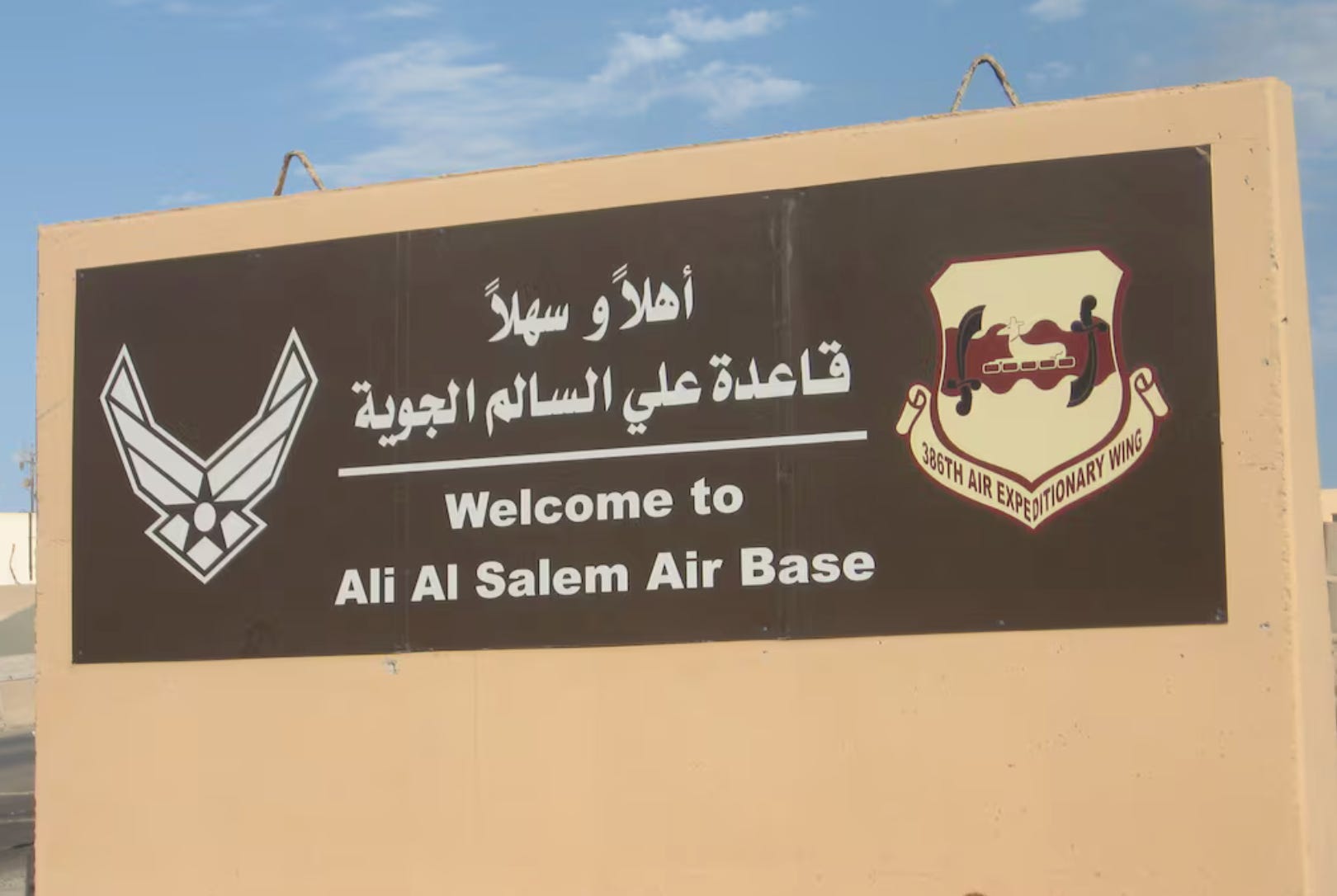
Photo credit: Wikimedia Commons / TravisAF. Welcome sign to Ali Al Salem Air Base in Kuwait.
The first attack injured five U.S. soldiers and destroyed two MQ-9A Reaper drones, each costing $50 million.
Two days later, the IRGC attacked the same base. Esmaeil Baghaei, Iran’s foreign ministry spokesman, claimed that “Iran’s strikes against those bases & assets that are used to launch unlawful attacks against Iran are a lawful exercise of self-defense.”
As we shall see below, in actuality, they are indicative of the IRGC going on offense, both in the Persian Gulf and in Lebanon.
Bahrain would be next. Iran attempted to strike the U.S. 5th Fleet Headquarters in Bahrain. Tehran claimed that it was successful.
U.S. Central Command (CENTCOM), however, denied the claim and posted on X that “All Iranian attacks on American forces failed.”
Clearly, an Iranian pattern is developing. The question is why.
***
IRANIAN CLAIMS OF SELF DEFENSE
The IRGC is attempting to frame its attacks in Kuwait and Bahrain as defense measures to counter U.S. strikes in and around the Strait of Hormuz. Yet, it is Iran that is provoking those strikes by laying mines in the strategic waterway and lighting up U.S. aircraft operating in the vicinity of the strait with surface-to-air radar.
Mohsen Rezaei, a senior military adviser to Iran’s Supreme Leader and himself a former IRGC commander, took it one step further. He stated that, “The response to every [U.S.] shot and aggression will be a barrage of missiles and drones.”


That is not self-defense. That is offense.
Rezaei then quickly explained why. He asserted that, “Neither in negotiations nor in the ceasefire process will [Iran] give excessive concessions to America. The response to any attack, aggression, or missile strike is missile retaliation and persistence.”
He added that, “history does not turn back, and the aggressor will be swiftly punished.” What he did not say is that Iran is expanding its definition of aggression to Israeli attacks against Hezbollah in Lebanon.
It took Mohammad Bagher Ghalibaf, the Iranian parliament speaker, to convey that message to Washington and Jerusalem.
***
GHALIBAF EXPANDS THE PLAYING FIELD
On Monday, Ghalibaf made it clear that Iran is expanding the playing field in the U.S.-Israel war against Iran. He posted on X that, “If the Israeli aggression against Lebanon continues, we will not only halt the path of negotiations, but we will also be in direct confrontation with the enemy.”
Only one day later, Ebrahim Zolfaghari, the spokesman for Iran’s Khatam al-Anbiya Central Headquarters, the IRGC’s joint operational command, declared that “We will respond to each of your attacks 10 times heavier and stronger. We are free to fire and do not need anyone’s permission to punish you.”

Then today, Iran carried through on its word. Except it was not against U.S. forces, it was against innocent civilians at the Kuwait International Airport. Heinously, the IRGC did make good on its word.
Its drone strike on Terminal 1 injured ten times — nay, 12 plus times — as many people as its June 2nd attack against the Ali Al Salem Air Base in Kuwait.
***
TERMINAL 1
Initially, in the aftermath of the Iranian attack today on Terminal 1 at the Kuwait International Airport, Iran denied it had targeted.
IRGC spokesman Brig. Gen. Hossein Mohebbi was quoted by Tasnim, a semi-official Iranian state news agency, as saying that “Our investigation and review into the Kuwait passenger terminal attack shows that the IRGC Air Force did not fire any shots at this target.”
He then claimed that “The destruction of the Kuwait airport passenger terminal was caused by an error in the American Patriot systems, which landed on the terminal after failing to intercept Iranian missiles.”
CENTCOM immediately cried foul.
In a post on X, CENTCOM strongly denied the claim, stating that it was “Totally FALSE.” They then asserted that “Iran struck the civilian airport with drones in a deliberate, calculated, and unjustified attack.”
Then, late in the day, video emerged clearly showing an Iranian Shahed drone deliberately aiming at and striking Terminal 1.

Yet again, Iran was caught in a blatant lie. Nothing surprising there. The only question was, what would President Donald Trump do about it?
***
TRUMP ELECTS TO DAWDLE
Trump continues to refuse to put the IRGC down for the count. We get it. He is balancing the damage to the global economy, and he is also grappling with growing domestic discontent over rising gas prices.
The latter is never good during vacation season. That said, domestic politics is not our gig. As we often intentionally repeat, we leave political analysis to the experts.
U.S. national security and that of our allies is our only guiding star. Leaving Iran unfinished only puts our country at risk. Not just in terms of Iran’s nuclear risks, but also in terms of potentially ceding influence in the Persian Gulf to China.
Time, theoretically, is on Trump’s side. However, Iran also views time as its best defense against the White House.
That is why Trump’s dawdling is dangerous. Iran is being emboldened by Trump’s hesitancy to resume military operations.
The IRGC, however, as we noted above, is treating that as a green light to increasingly resort to kinetic actions against U.S. forces and our Gulf State allies. Likewise, as we warned today in the Washington Star, Tehran is using that as leverage to save Hezbollah, its IRGC-backed proxy in Lebanon.
In turn, the IRGC is trying to use Hezbollah to create a wedge between Trump and Israeli Prime Minister Benjamin Netanyahu. Thus far, they are winning. The White House, seemingly, is lost in the circular illogic of its negotiating stance with Iran.
That is especially the case in Lebanon.
***
ISRAEL AND LEBANON AGREE TO A CEASEFIRE
To be clear, it is a good thing that the elected government of Lebanon and Israel are talking. Technically, the two countries have been in a state of war since 1948, when Lebanon participated in the invasion of Israel upon its founding by the United Nations.
Today’s ceasefire brokered by the U.S. with Secretary of State Marco Rubio taking the lead is a step in the right direction. However, Lebanon will be powerless to fully implement the ceasefire because its military forces are not the ones firing at Israel.
Hezbollah, essentially, is an occupying force controlled by the IRGC. It is the one firing rockets at central and northern Israel. Unless and until Hezbollah is banished from Lebanon, and Iran’s funding and control over it is permanently ended, nothing substantive will change for the better between Jerusalem and Beirut.
Yet instead of letting Israel achieve just that, Trump has ordered Netanyahu to put on the brakes lest it disrupts his peace talks with Iran. Doing so, however, is playing right into Maj. Gen. Ahmad Vahidi and the IRGC’s hands.
***
IRAN’S NEWLY FOUND LEVERAGE
Thus far, all Trump has succeeded in doing is giving Iran a new avenue to create negotiating leverage against the U.S. To say the least, it is self-defeating, especially as evidenced by Ghalibaf’s statements and Iran’s actions, the IRGC is already using it to the max to try and exact negotiating concessions from the White House.
Iran, in this regard, is winning. Yes, Trump is right, it is not a conventional military win. However, as we have noted here before, it is risking becoming an asymmetrical win and if that happens, it will be the worst strategic defeat in U.S. history.
Washington, on a bipartisan basis, needs to come together to chart a winning path in Iran. If it fails, generations of Americans to come will pay a huge price.
***
IT IS TIME TO STOP LETTING THE IRGC WIN
Iran for most of this week has been scoring one win after another against the U.S. It has attacked U.S. forces and Gulf State allies. It has created new leverage in Lebanon. It has succeeded in freezing Trump into a holding pattern.
Then, to top it off, just as we were closing tonight’s INTREP360 Intelligence Report, the IRGC got another win on Capitol Hill. The House voted 215-208 to try and force Trump to remove U.S. troops from the Middle East under the terms of the War Powers Act.
Granted, it was largely symbolic. The Senate still has to pass it, and Trump is highly likely, if necessary, to appeal it to the Supreme Court.
In theory, we are supportive of U.S. presidents obtaining Congressional approval for sustained military actions.
It is only the timing that we object to here. Trump, whether you like him or not is attempting to negotiate and end of the war with Iran. Congress tonight, in our view, just made that harder. Iran will see it as a win and only become more emboldened as a result.
We really need to get on the same page again in this country. Partisan divide — on both sides — is only aiding and abetting Iran.
***
PROGRAMMING NOTE
Tomorrow, in our weekly 7 AM ET Thursday national security column at The Hill in Washington, D.C., we warn the White House that Iran is not playing by Trump’s rules.
You can read it here when it goes live.
***
ICYMI
In our regular weekday column for The Washington Star, we wrote about Iran’s overnight strike on a passenger terminal at Kuwait International Airport.
We argued it is an example of how Iran is increasingly using kinetic ceasefire violations to gain negotiating leverage over the Trump Administration.
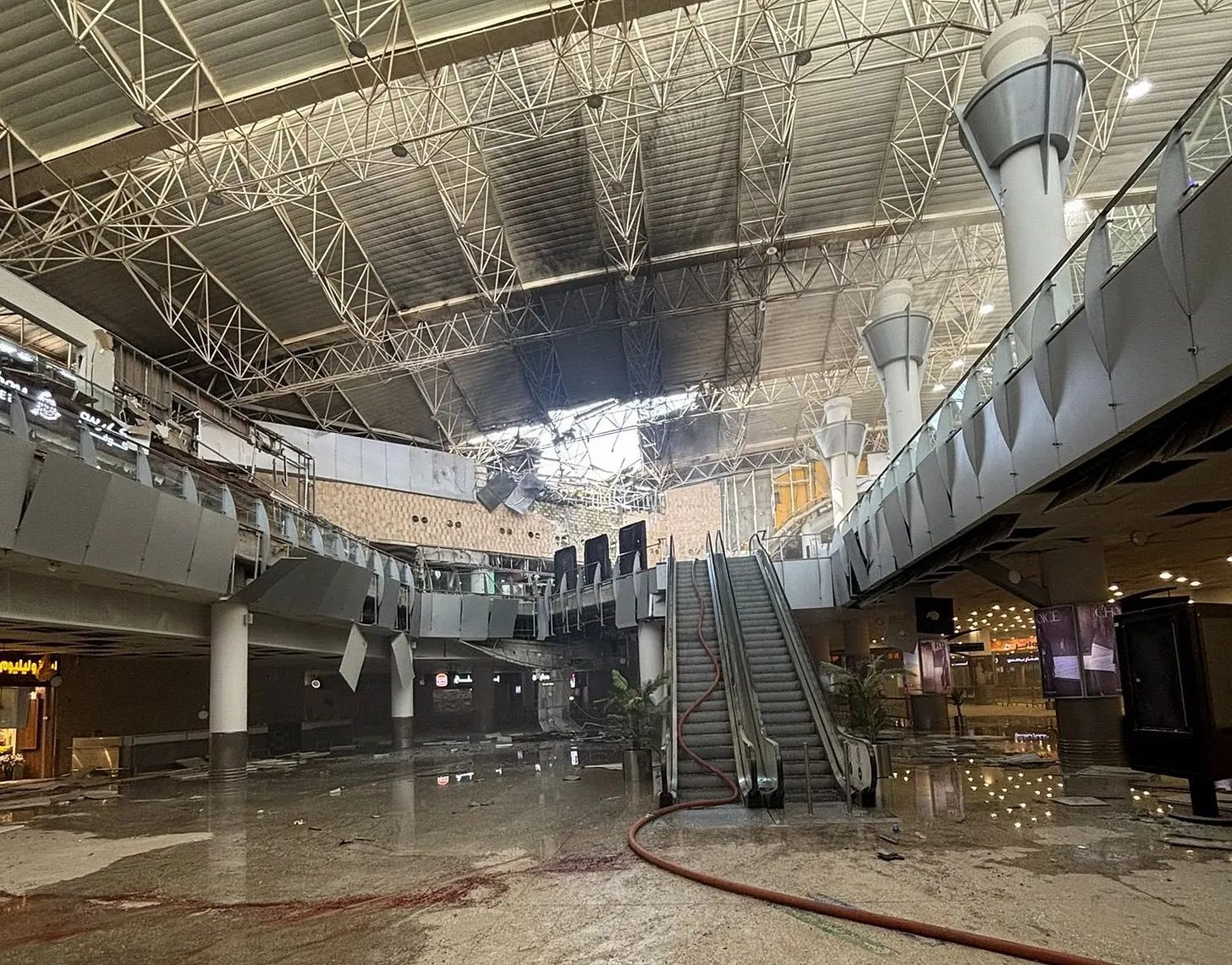
Photo credit: Ariel Oseran / X. Damage is seen at Kuwait International Airport’s Terminal One Wednesday.
You can read it here. It is not behind a paywall.
***
Thank you for reading. We will see you tomorrow. Please subscribe, comment & share. We truly appreciate it!
Jon & Mark
Follow Jon on X at @JESweet2022 or on Bluesky at @JonSweet.bsky.social. Follow Mark on X at @MCTothSTL or on Bluesky at @MarkToth.bsky.social.
The negotiations need real negotiators...not real estate investors.
Every day Taco and his cronies, "Dumb and Dumber", carpet merchants, humiliate the USA; and we Europeans are like an extinguished candle. Completely pathetic.