

INTREP360 INTELLIGENCE REPORT
04.11.2026

April 11th, 2026
Greetings!
As I expected—and as Jon & I argued Friday in USA Today—the ceasefire in Iran is proving to be a road to nowhere. Late tonight, despite a 21-hour marathon, peace talks between the U.S. & Iran broke down.
Vice President JD Vance—looking somber, if not deflated—announced that “They [Iran] have chosen not to accept our terms.” For now, he did leave a window open saying, “We leave here with a very simple proposal: a method of understanding that is our final and best offer.” He then added, “We will see if the Iranians accept it.”
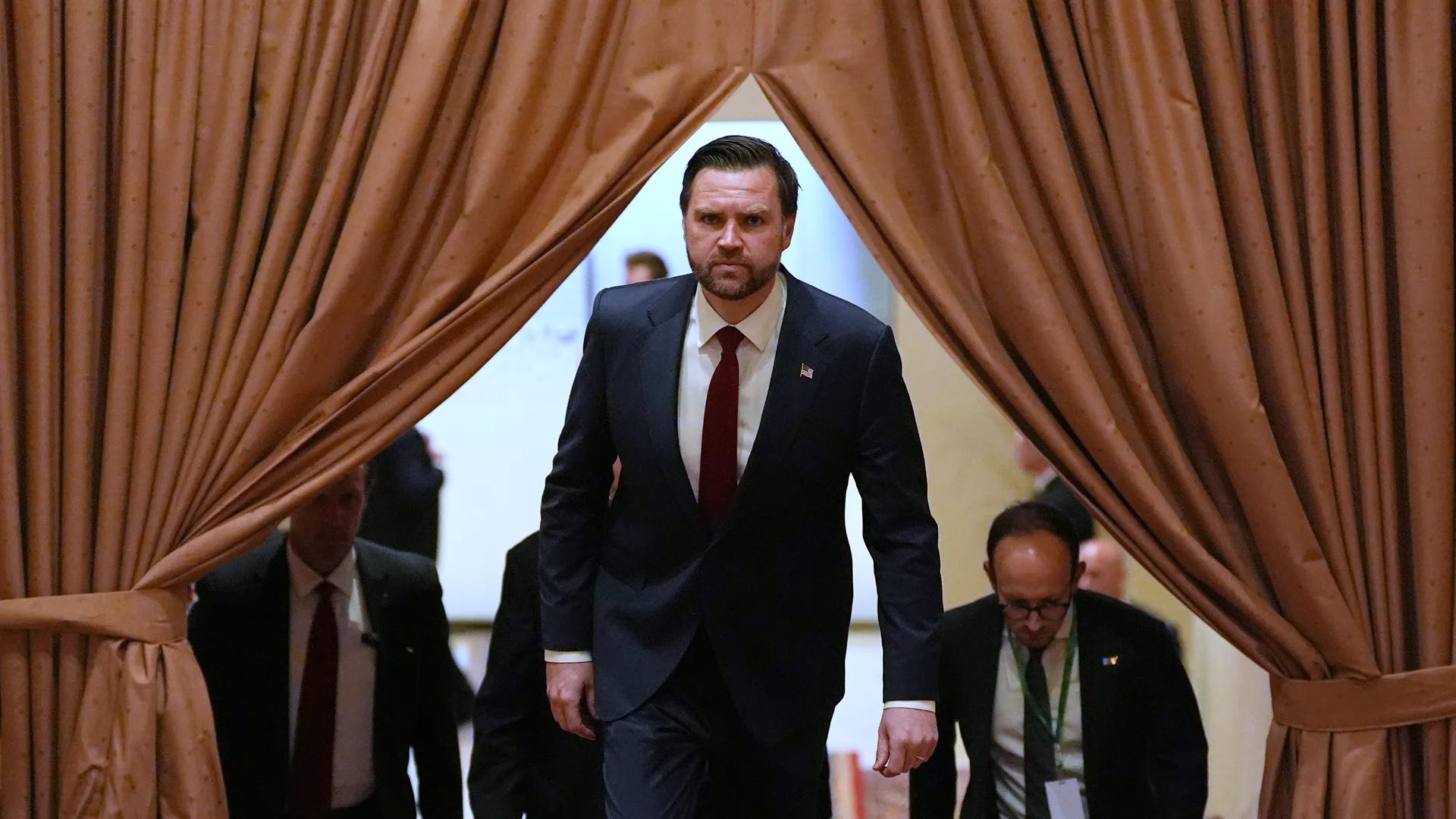
Photo credit: Jacquelyn Martin / Vice President Pool. Vice President JD Vance enters the press room in Islamabad, Pakistan on April 11th, 2026, to announce that peace talks between the U.S. & Iran failed.
Yesterday, in these pages, we concurred with President Donald Trump’s assertion that we’d know a lot more in 24 hours.
Now, we do.
Jon is traveling with family this weekend & while we normally do not pen our INTREP360 Intelligence Reports on Saturdays & Sundays—as national security analysts, it is good to stop for a few days to make sure we are seeing the forest for the trees—I thought it important to quickly assess where we now stand & where we are likely headed in Iran.
Let’s get started!
***
First & foremost, it appears that the U.S. did—as we called for last night—take a maximalist approach to Iran. Especially when it came to the nuclear file. Team Trump held the line saying no uranium enrichment into perpetuity.
Iran rejected that.
Conversely, Iran showed up likely wanting to negotiate from the bottom up before tackling major issues such as its nuclear weapons program, ballistic missiles, support of its militant Axis of Resistance proxies, & control over the Strait of Hormuz.
Instead, by all outward appearances, Team Trump did essentially try to dictate Iran’s unconditional surrender.
But Mohammad-Bagher Ghalibaf, the Speaker of Iran’s Parliament & head of its negotiating delegation in Islamabad wasn’t having it. He wasn’t likely to cave into U.S. pressure & he didn’t. Indeed, according to reporting by Barak Ravid in Axios, Iran believes the talks failed due to “excessive [U.S.] demands.”
I’d argue they failed for a more fundamental reason. As I pointed out earlier today on Al Qahera News in Cairo, Egypt, the U.S. & Iran simply have very different definitions of what constitutes winning.
For Team Trump, winning is viewed in military terms. Indeed, purely from that vantage point, the U.S. is winning.
However, Iran sees winning as regime survival. They too, from that perspective are winning. Faces have changed—meaning leaders such as Ayatollah Ali Khamenei & Ali Larijani have been killed & replaced—but the militant ideology of the Islamic Revolutionary Guard Corps (IRGC) remains intact.
***
Trump, going forward, must understand that distinction. He is convinced that he has affected regime change. He hasn’t.
Failing to understand—in my view—is what is causing Trump’s strategic impatience in Iran & his ill-advised willingness to enter into ceasefire negotiations far too soon. Last week, in a piece that Jon largely wrote for us in our weekly national security column at The Hill, we warned Trump that he was giving a militarily beaten Iran a win.
As Jon warned for us in the piece, it was a mistake for Trump to leave a severely wounded but intact IRGC-dominated regime to fight another day. Instead, as Jon argued, the U.S. would have been better served to continue attacking Iran’s center of gravity—chiefly, the IRGC & its Basij street enforcers.
***
We also learned today how Iran planned to negotiate. Ghalibaf & company clearly were planning to negotiate ad infinitum.
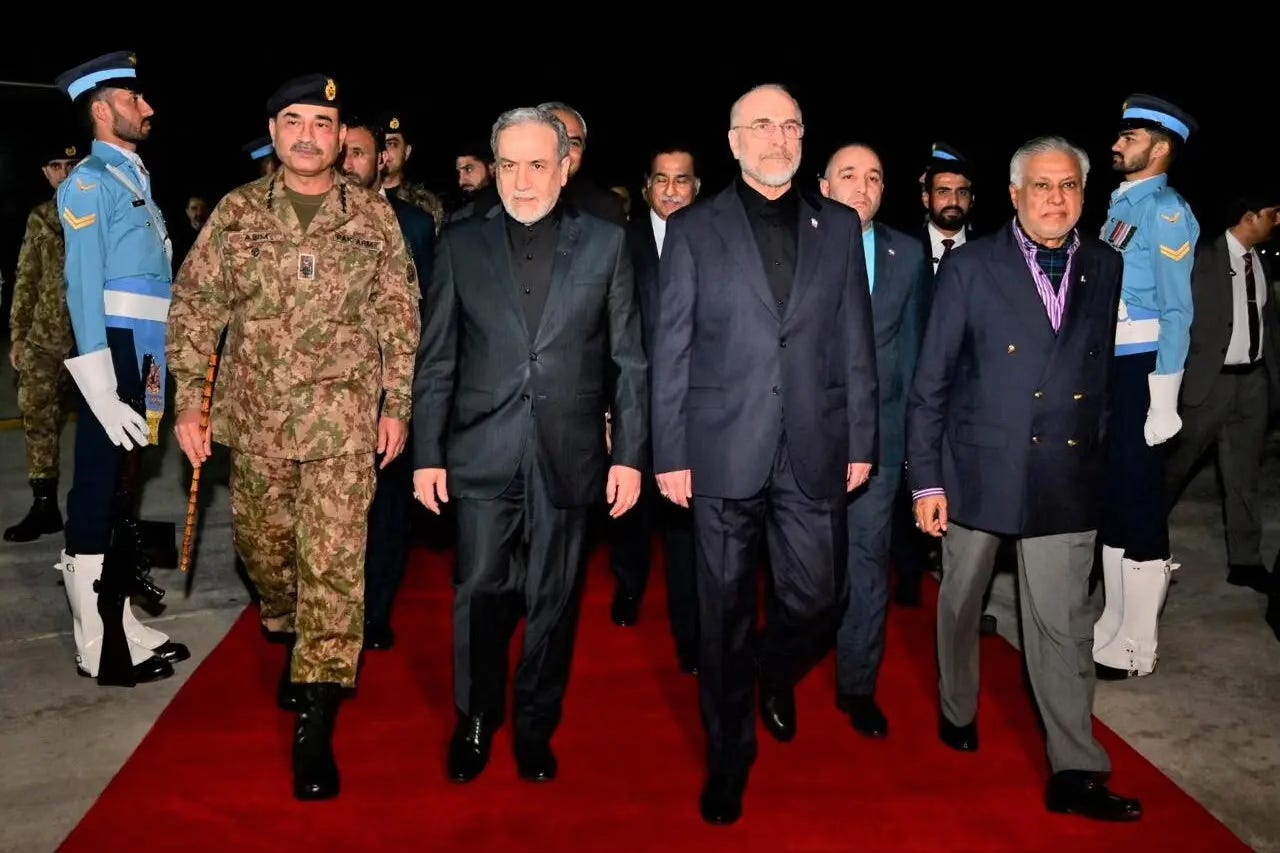
Photo credit: Pakistan’s Ministry of Foreign Affairs. Iran’s delegation arrival in Pakistan on April 10th, 2026, led by Mohammad Bagher Ghalibaf (second from right), the Speaker of the Iranian Parliament, & Abbas Araghchi, Iran’s Foreign Minister (second from left).
Led by Ghalibaf & Iranian Foreign Minister Abbas Aragchi, Iran, according to reporting in The New York Times (NYT), brought a delegation of 70 plus officials, including “experienced diplomats and negotiators, experts in finance and sanctions, military officials and legal advisers.”
Contrary to the Farnaz Fassihi, the author of NYT’s piece, I don’t believe it was, as she put it, because “Iran appears to be taking the talks on Saturday seriously.” Rather, Iran, in my view, was attempting to enter into a series of endless negotiations to buy time for the IRGC to recover from U.S. & Israeli airstrikes.
Indeed, earlier this afternoon, there were reports that three more business jets arrived from Tehran carrying even more Iranian officials. Granted, Iran may have fallen for its own propaganda & believed it had the upper hand in the peace talks but I doubt it.
Either way, Vance was wise not to fall for it. In my view, Tehran was just hoping—in sports terms—to play out the clock.
***
We certainly do know more now about who is really in charge in Iran. Clearly, it is the IRGC. We know that because Iran maintained a maximalist negotiating position. As Ravid noted in his article for Axios, Iran refused to budge off of uranium enrichment, giving up its stockpile of 440.9 kilograms of 60% highly enriched uranium & control of the Strait of Hormuz leading into & out of the Persian Gulf.
As Jon & I pointed out in our USA Today piece, Iran—alongside its proxies—views the two as its way of projecting regional, if not global, power. The IRGC—in its view—believes maintaining all three are essential for regime power.
***
Team Trump, conversely, kept it simple by comparison, choosing instead to use the USS Frank E. Peterson (DDG 121) & USS Michael Murphy (DDG 112)—both destroyers—as its supplemental negotiating team. CENTCOM sailed both U.S. Navy vessels through the Strait of Hormuz today in a freedom of navigation display of force.
As I noted earlier this evening on World News Tonight on TVP World—hosted by my good friend Don Artleth—Trump also clearly intended their mission through the strait to demonstrate to the Iranian negotiation team that the Strait of Hormuz is not quite the negotiating card Tehran believes it is.
It was, in many ways, Trump’s version of carrying a big stick while the negotiations in Islamabad played out. To that end, it also solidified our view that the Strait of Hormuz will be the decisive terrain of this war.
Whoever controls it at the end of the war will be the true strategic winner. Today, perhaps for the first time, given this mission, Trump himself is finally acknowledging that.
***
So where are we at? Vance didn’t slam the door shut. He just left. I suspect, but obviously can’t know, that Washington will give Iran a day or two to reconsider.
They might, however, I highly suspect if they do, it will just be more of an Iranian version of Kabuki theater. Until the IRGC is militarily made to realize it is losing, nothing much is likely to change at the negotiating table between the U.S. & Iran.
In that regard, as Jon keeps pointing out, Trump’s strategic impatience from a military perspective got the better of him. By trying to force a peace deal, he prematurely suspended a highly successful military campaign that was being waged against Iran by Adm. Brad Cooper, the Commander of U.S. Central Command, & his staff.
***
Lastly, before I close out this edition, Israel, which as we noted here last night did not have a seat at the negotiating table in Islamabad, nonetheless made their voice heard today. Israeli Prime Minister Benjamin Netanyahu made it clear in a video statement that Israel’s fight against Iran is not over despite “historic achievements.”
***
Hang on. This isn’t over. Unless Iran has a complete change of heart—and that is highly unlikely—or Russian President Vladimir Putin and/or Chinese President Xi Jinping intervene & advise Ahmad Vahidi, the IRGC Commander-in-Chief & de facto real leader in Iran, to call it a day & throw in the towel to Washington.
That’s not likely either.
Instead, it is more likely than not that Adm. Cooper will be commanded to build upon what he called yesterday Iran’s “generational defeat” & turn it into a permanent defeat for Vahidi & the Islamic Republic of Iran.
***
Thank you for reading this special weekend edition! We will see you Monday. Please subscribe, comment & share. We truly appreciate it!
Mark
Follow Jon on X at @JESweet2022 or on Bluesky at @JonSweet.bsky.social. Follow Mark on X at @MCTothSTL or on Bluesky at @MarkToth.bsky.social.
"A couple of weeks." "We won."