

INTREP360 INTELLIGENCE REPORT
04.14.2026

April 14th, 2026
Greetings!
Perhaps in a moment of channeling John Lennon and his song “War is Over,” President Donald Trump today told Maria Bartiromo — the Fox Business & Mornings with Maria host — that the war in Iran “was over.”
Not so fast.
The Islamic Revolutionary Guard Corps (IRGC) & Iran’s Axis of Evil allies — especially China — still get a vote.
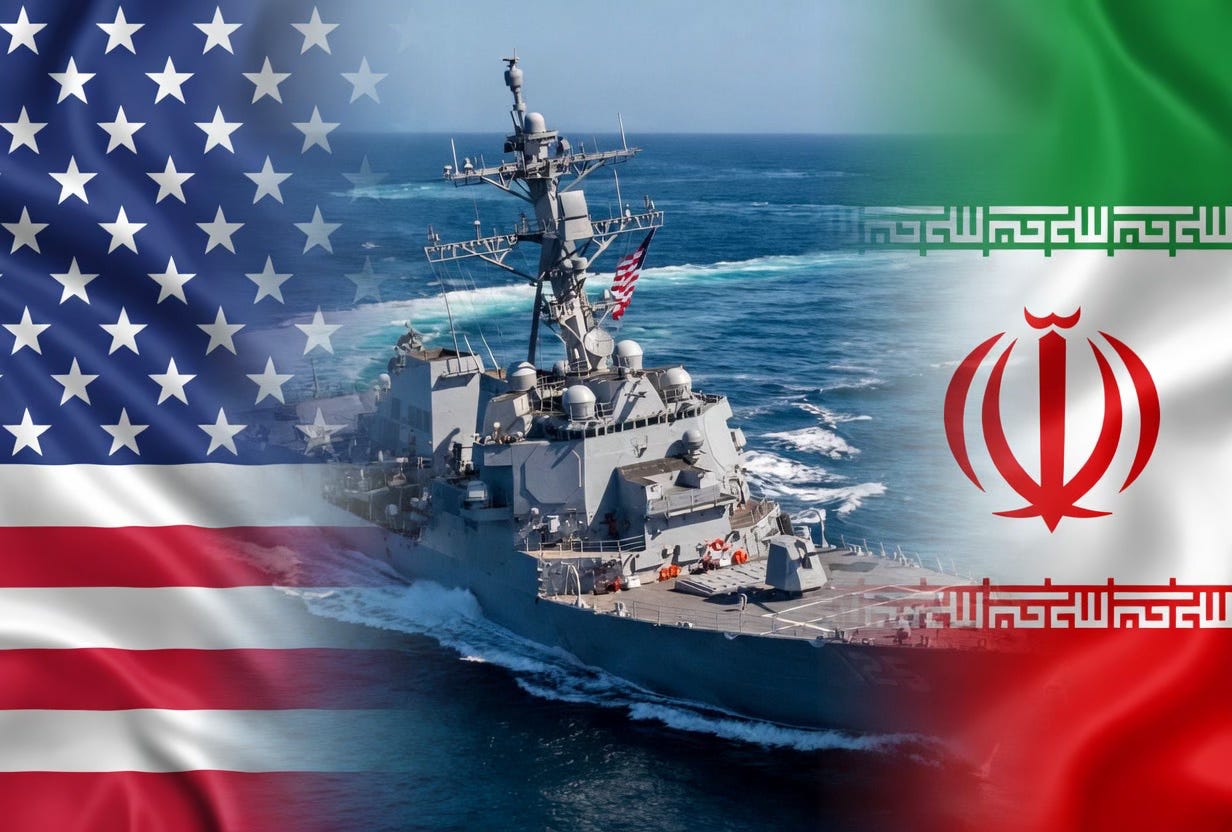
AI image credit: Grok. U.S. Navy destroyer enforcing the U.S. Naval blockade of Iran.
Initially, last week, we argued in USA Today — and still stand by it — that the ceasefire was on a road to nowhere. Especially given that Iran was endeavoring to create an economic stranglehold on the Strait of Hormuz.
Our argument then?
More U.S. kinetic action was needed before Iran — chiefly, Ahmad Vahidi, the head of the IRGC — would entertain entering into meaningful peace talks.
***
That proved to be the case. Team Trump — wisely — introduced a military game changer by blockading Iranian ports in the Persian Gulf & Gulf of Oman after the peace talks in Islamabad fell apart.
Adm. Brad Cooper, the Commander of U.S. Central Command (CENTCOM), announced earlier today that the blockade has now been “fully implemented.” Significantly, he said that the blockade was emplaced in less than 36 hours.


Trump’s blockade — as we observed at the New York Post today — was primarily designed to eliminate Iran’s own blockade of the Strait of Hormuz as negotiating leverage during any future peace talks.
Last month alone, during 31 days of the war, Iran earned nearly $5 billion in oil exports while blocking crude oil shipments from Iraq & the Gulf States. Predictably — with the tables turned — Iran accused the U.S. of “piracy.”
Now that tap is being turned off and with it, much of Iran’s domestic economy & access to foreign currency.
Iranian oil exports transiting the Strait of Hormuz account for nearly 80% of Iran’s total exports. Plus, historically, 90% of Iran’s global trade — meaning imports & exports — is transited by sea from its key ports, including Shahid Rajaee, its largest container port, Imam Khomeini, Bushehr, Chabahar, & Anzali on the Caspian Sea.
Overland alternatives exist — including rail — however, with its existing supply chain largely cut off, fiscal liquidity quickly drying up, and an army as well as IRGC & Basij forces to pay for, relief can’t & won’t come any time soon.
Team Trump — whether you love them or hate them — has put Vahidi and the IRGC between the proverbial rock & a hard place.
Escaping it won’t be easy.
***
Significantly, Team Trump is doubling down on its economic approach to negotiating with Iran. Despite volatile global oil prices — the current price of Brent crude oil is $95.34 a barrel — Scott Bessent, the Treasury Secretary, announced that the U.S. will not renew its 30-day waiver on Iranian oil sanctions.
Operation Epic Fury — as one U.S. official put it — “is going full force on Economic Fury.” Russia’s waiver, albeit more quietly, was also allowed to expire.
Notably, Chinese President Xi Jinping was put on notice as well. Earlier today, Bessent accused Beijing of being an “unreliable partner” by hoarding oil during the ongoing war in Iran and that — during the blockade — “They’re not going to be able to get their oil. They can get oil. Not Iranian oil.”
It is a full court-press. It’s also a power grab. As the old saying goes, real power isn’t given — it’s taken & Team Trump is taking Iran & China’s oil off the table.
***
Washington doing just that is “real power.” That said, like all actions, there are reactions & Beijing may yet weigh in.
Breaking the blockade — or at least attempting to do so — is one possible second- or third-order effects Beijing could resort to. China does have a deep-water naval port in Djibouti — the People’s Liberation Army Support Base — situated in the Horn of Africa and near the strategic Bab-el-Mandeb Strait.
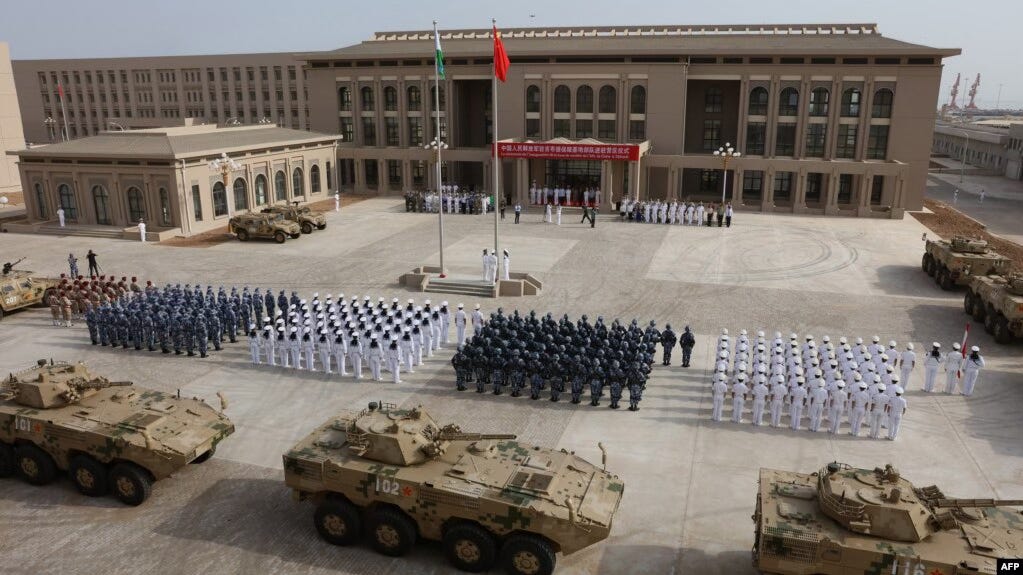
Photo credit: AFP. Chinese People’s Liberation Army personnel attend the opening ceremony of China’s new military base in Djibouti, Aug. 1st, 2017.
It is capable of handling aircraft carriers, destroyers, supply ships & submarines. That said, China, while working to close the gap, still only has limited blue-water endurance & in our view — other than showing the flag — Beijing is unlikely to directly challenge the U.S. Navy enforcing Trump’s blockade.
Yes, it briefs well in legacy media or among talking heads on TV, but in reality, China’s PLA Navy is largely designed as near-seas naval force & lacks the blue-water tankers & replenishment vessels needed to support a distant naval force over a long period of time.
Plus, head-to-head, although China enjoys a numerical advantage, when it comes to firepower & defense, it is simply — for now — outmatched.
***
China’s best cards to play — if Xi elects to actively intervene — include continuing to support a cash-strapped Iran economically. Especially as it loses access to a majority of its oil revenues. Likewise, dispatching new military aid. Ditto providing the IRGC with satellite targeting intel to strike U.S. forces operating in the region.
Iran — especially Vahidi & the IRGC — desperately needs time to survive. Only Beijing — Russia can’t & won’t do so due to its own budgetary woes due to war costs & Ukrainian strikes on its own oil & gas export infrastructure — can buy them that time.
That said, China’s economy is facing strong headwinds from the U.S.-Israel war against the Islamic Republic of Iran. Exports growth slowed considerably to 2.5% in March from 22% in January & February (combined).
Plus, year over year, Beijing’s trade surplus more than halved from $103 billion in March 2025 to $51 billion this year.
Xi, therefore, faces a choice. Either he backs Iran — his putative Axis of Evil ally — or he folds leaving Trump firmly in control of yet another key Chinese source of oil (just as Trump has done in Venezuela & Nigeria).
In terms of the latter, as we noted today in our New York Post piece, Trump’s oil squeeze on Iran is intended strategic messaging to Xi as he continues to put the squeeze on Taiwan & other U.S. allies in the Indo-Pacific.
Our best read — and we could be wrong — is that Beijing continues its pattern of hedging its bets. Xi won’t cut the IRGC off, but he won’t forcefully intervene either in terms of breaking the U.S. blockade of Iranian ports.
Taiwan remains his top near-term priority. He sees it as key as breaking the U.S.’ First Island Chain strategy of containing China first envisioned by former U.S. Secretary of State John Foster Dulles in 1951.
The First Island Chain consists of Japan to the north, Taiwan in the central section, and the Philippines extending toward Borneo & the Malay Peninsula to the south.
***
Vahidi gets a vote too. As we’ve noted here multiple times over the past week, Mohammad-Bagher Ghalibaf, the Speaker of Iran’s Parliament, and Abbas Araghchi, Iran’s Foreign Minister, are not the final decision makers.
Vahidi is.
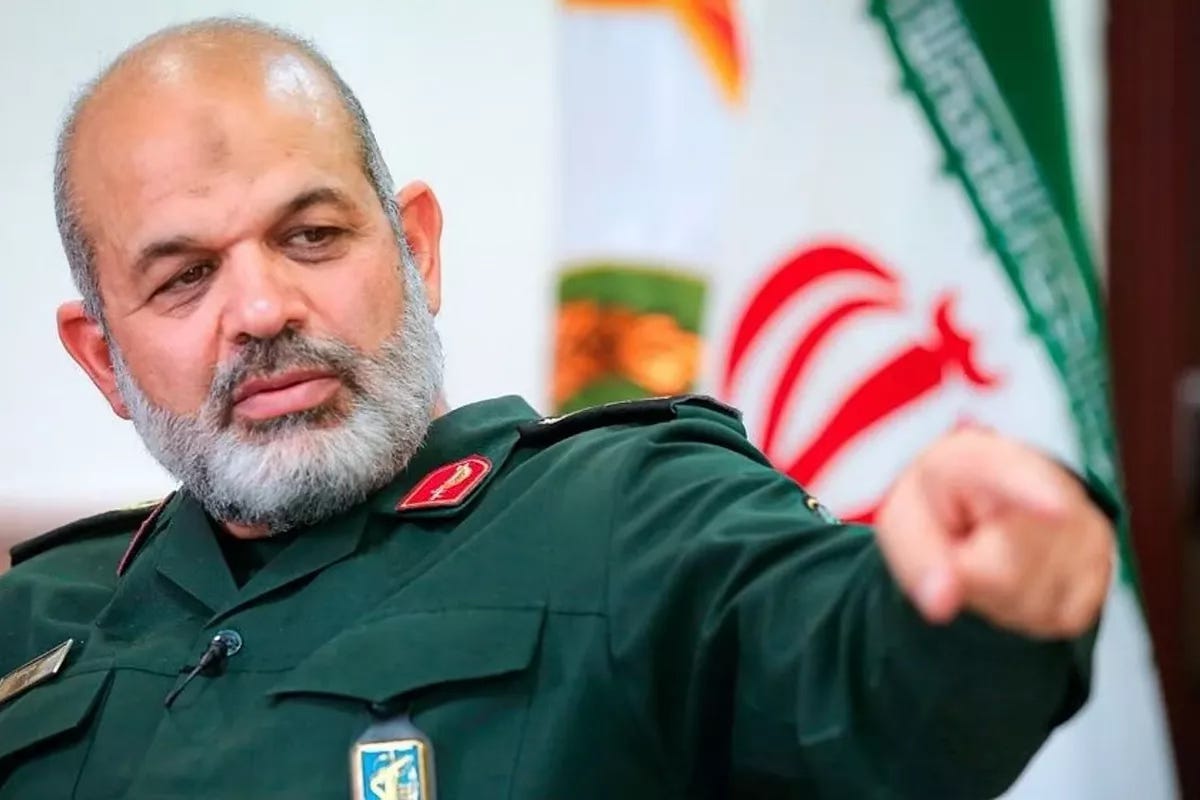
Photo credit: AP. IRGC head Ahmad Vahidi in an undated photograph.
For now, it is not clear at all that he’s ready to concede. Earlier today, there were reports that Iran is actively attempting to dig out ballistic missiles, drones & launchers from the so-called Missile Cities that were buried by U.S. airstrikes.
Plus, as we noted above, the IRGC is still coordinating with China for the delivery of new military aid.
That tells us that from a command & control standpoint, the IRGC — and by extension the Basij, its paramilitary street enforcers — is still largely intact. You don’t dig — or at least you wouldn’t think so — unless you plan to keep fighting.
***
Overall — and again, we could be wrong — is our best assessment is that Team Iran will continue to try to use peace talks to buy time to reset. Ghalibaf & Araghchi might yet reach an agreement with Team Trump but that begs the question whether Vahidi will accept it and, if he does, whether he just uses it to wind time down off the clock.
November gets nearer every day & Vahidi likely believes the U.S. midterms are his best chance at ensuring regime survival — and that, significantly, means his ensuring survival of Iran’s nuclear weapons program.
If so, then more kinetic U.S. military action — as we outlined today at the New York Post — will be needed. The IRGC is down, but it is not out.
***
ICYMI!
Earlier today, in our latest national security op ed at the New York Post, we argued that Trump’s decision to blockade Iranian seaports was aimed at severing the IRGC’s jugular & intended as strategic messaging to China.
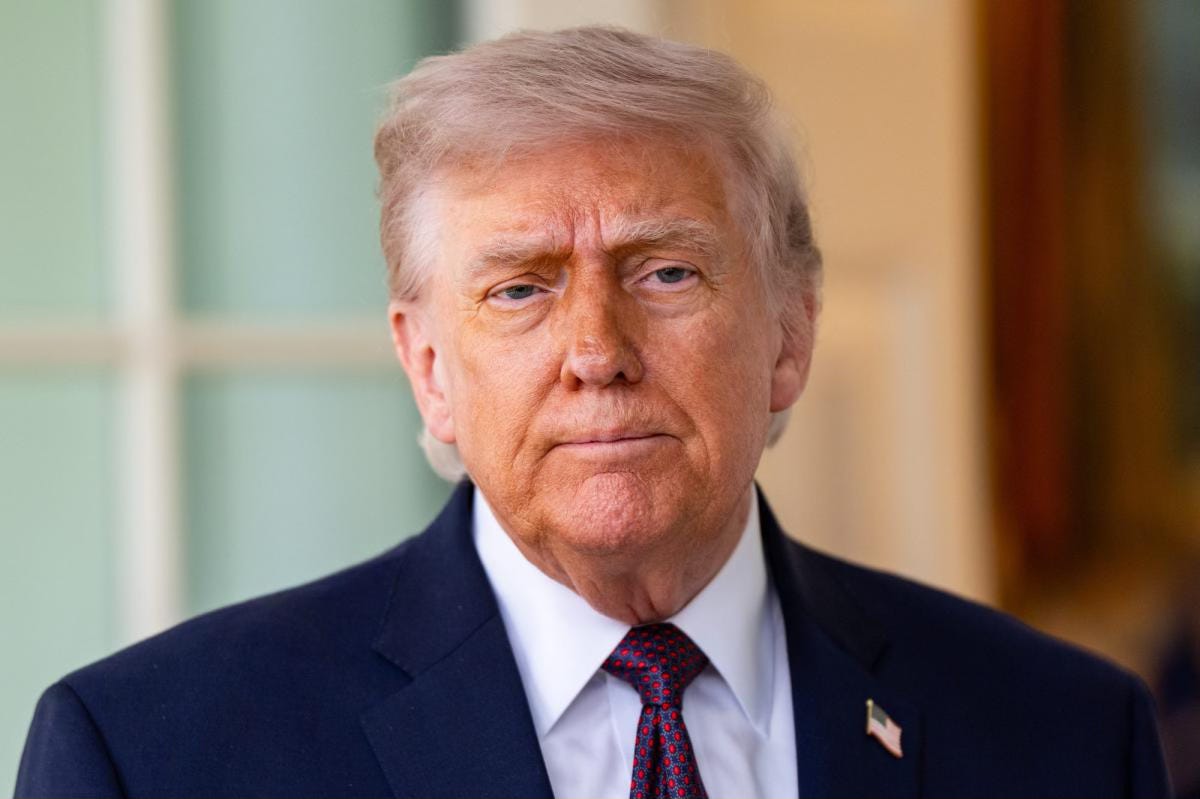
Photo credit: New York Post. President Donald Trump in an undated photograph.
You can read it here. Or if you are in New York City, you can find it at your local newsstand or store.
***
Before we close, we want to welcome our new subscribers. We truly appreciate your readership and support.
As long-time readers know, we are intentionally apolitical. Everyone is welcome here. U.S. national security — and that of our allies — is our only focus & our sole guiding star. We look forward to engaging with you & reading your feedback!
***
Thank you for reading. We will see you tomorrow. Please subscribe, comment & share. We truly appreciate it!
Jon & Mark
Follow Jon on X at @JESweet2022 or on Bluesky at @JonSweet.bsky.social. Follow Mark on X at @MCTothSTL or on Bluesky at @MarkToth.bsky.social.
Hopefully, the schism between the IRGC and their civilian counterparts will continue. However, people should not be confused that there’s any difference between it two.