

INTREP360 INTELLIGENCE REPORT
02.18.2026

February 18th, 2026
Greetings! In the future, we may look back at February as the long month’s journey into war in the Middle East.
A perfect storm is brewing. Washington & Tehran remain at negotiating loggerheads over three key stumbling blocks:
- Ending Iran’s nuclear weapons program including zero uranium enrichment going forward.
- Dismantling Iran’s ballistic missile program including short-, medium- & long-range variants.
- Ceasing funding, training & support for Hamas, Hezbollah, the Houthis & a dozen other major Islamic Revolutionary Guard Corps (IRGC)-backed militias & terrorist groups.
Photo credit: Grok AI. Long Month’s Journey into War.
Iranian Supreme Leader Ayatollah Ali Khamenei believes that all three form the pillars of his national power & thereby regime survival. Nuclear weapons to threaten the U.S. & Israel, ballistic missiles to conventionally check the Israel Defense Forces (IDF) & IRGC-sponsored militias to control the Mideast.
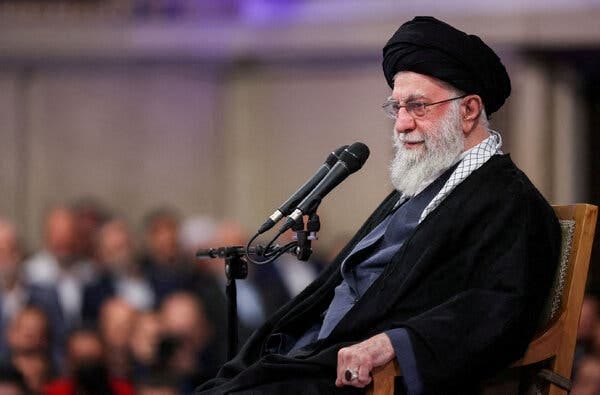
Photo credit: Office of the Iranian Supreme Leader. Ayatollah Ali Khamenei.
Conversely, Team Trump—likely—sees all three kinetic programs as existential threats to President Donald Trump’s Abraham Accords & the Board of Peace. Tomorrow is the inaugural meeting of the latter.
$5 billion is being pledged to begin rebuilding Gaza but that can’t start until Hamas is disarmed, & Hamas won’t disarm until Khamenei is gone. Something has to give & increasingly that looks like regime change in Iran.
In theory—as noted by The Wall Street Journal’s editorial board—Iran is hoping that Trump ‘pulls an Obama.’ Meaning that Team Trump allows Khamenei & his regime to survive in exchange for a time-limited nuclear deal.
Essentially, a 2026 version of the Joint Comprehensive Plan of Action (JCPOA), entered into by the Obama administration on July 14th, 2015––it wouldn’t become fully effective until January 16th, 2016.
But this isn’t 2016.
The facts on the ground have changed considerably. Unlike then, Iran’s centrifuge capacity—its ability to highly enrich uranium—was largely destroyed last August during the U.S. air & ballistic missile strikes on Fordow, Isfahan & Natanz.
Plus, most—if not all—of Iran’s 400 kilograms of HEU enriched to 60%—just shy of the 90% enrichment required to be considered weapons grade—is buried deep under rubble as a result of the attacks.
As such—effectively—Iran is seeking to get paid by the U.S. in the form of economic sanctions relief to temporarily stop pursuing nuclear weapons that it currently is largely already incapable of doing in the short-term. Remember, last September, the U.N. reimposed the so-called ‘Snapback’ sanctions on Iran.
So why would Team Trump do that?
If they do, then the only short-term outcome for the U.S. & its allies in the Middle East would be that Khamenei & his regime survives to fight the U.S. another day. Obviously, that makes zero sense.
Iran knows that. They were simply out to buy more time in Geneva & to do what they always do with negotiations: drag them out without any real intention—let alone good faith—of reaching a compromise or a “deal” as Trump puts it.
To be sure, Iranian Foreign Minister Abbas Araghchi will meet as many times as Steve Witkoff & Jared Kushner are willing to keep playing his shell game. Araghchi is a master—if not a Ph.D.—of scheduling meetings to schedule new meetings. Meanwhile, Iran is preparing for war & hardening its defenses.
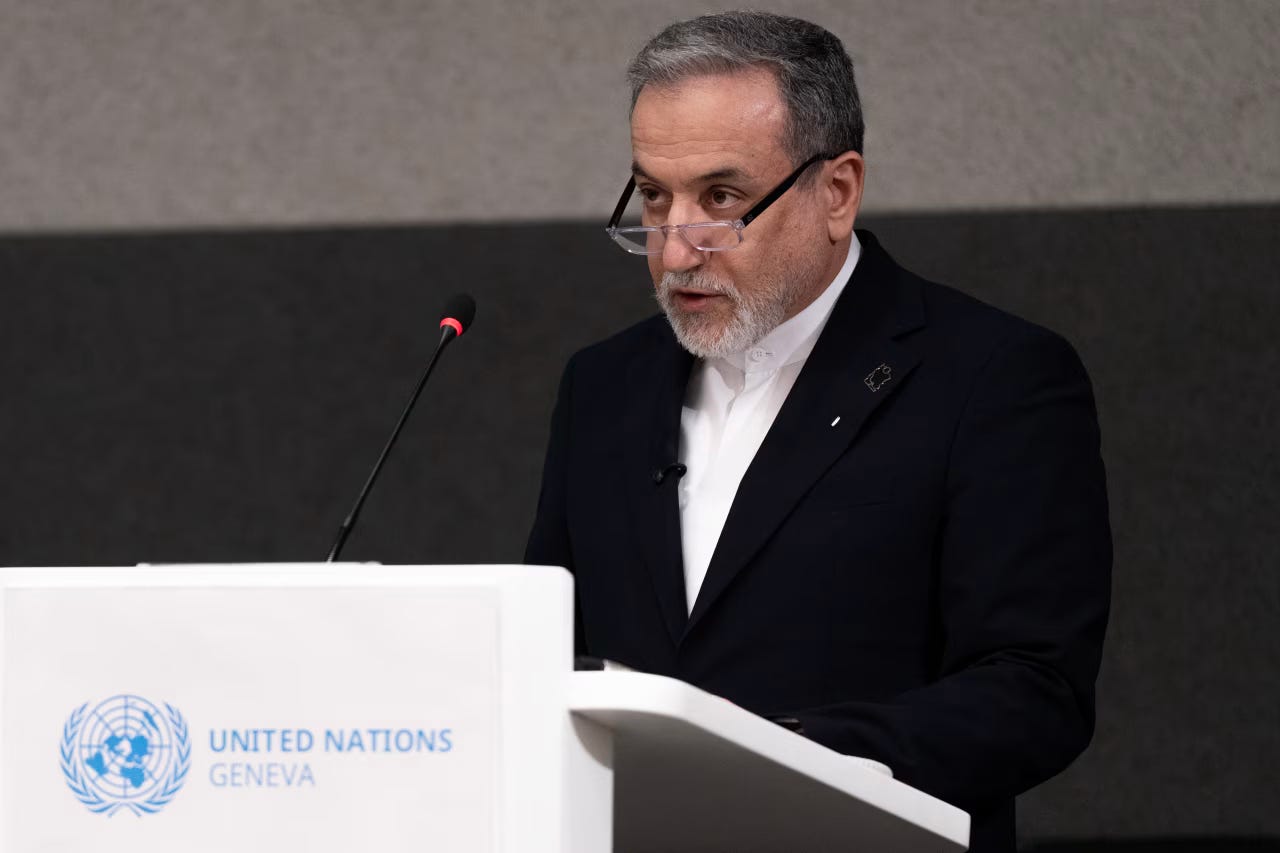
Photo credit: Jean-Marc Ferré / MAXPPP. Iranian Foreign Minister Abbas Araghchi speaking in Geneva.
Meanwhile, Iran—as we noted here yesterday—is continuing to reinforce its Taleghan 2 nuclear facility located at the Parchin Military Complex 20 miles southeast of Tehran. The Institute for the Study of War (ISW) is reporting that the nuclear plant has been completely covered by a “concrete sarcophagus covered with soil.”

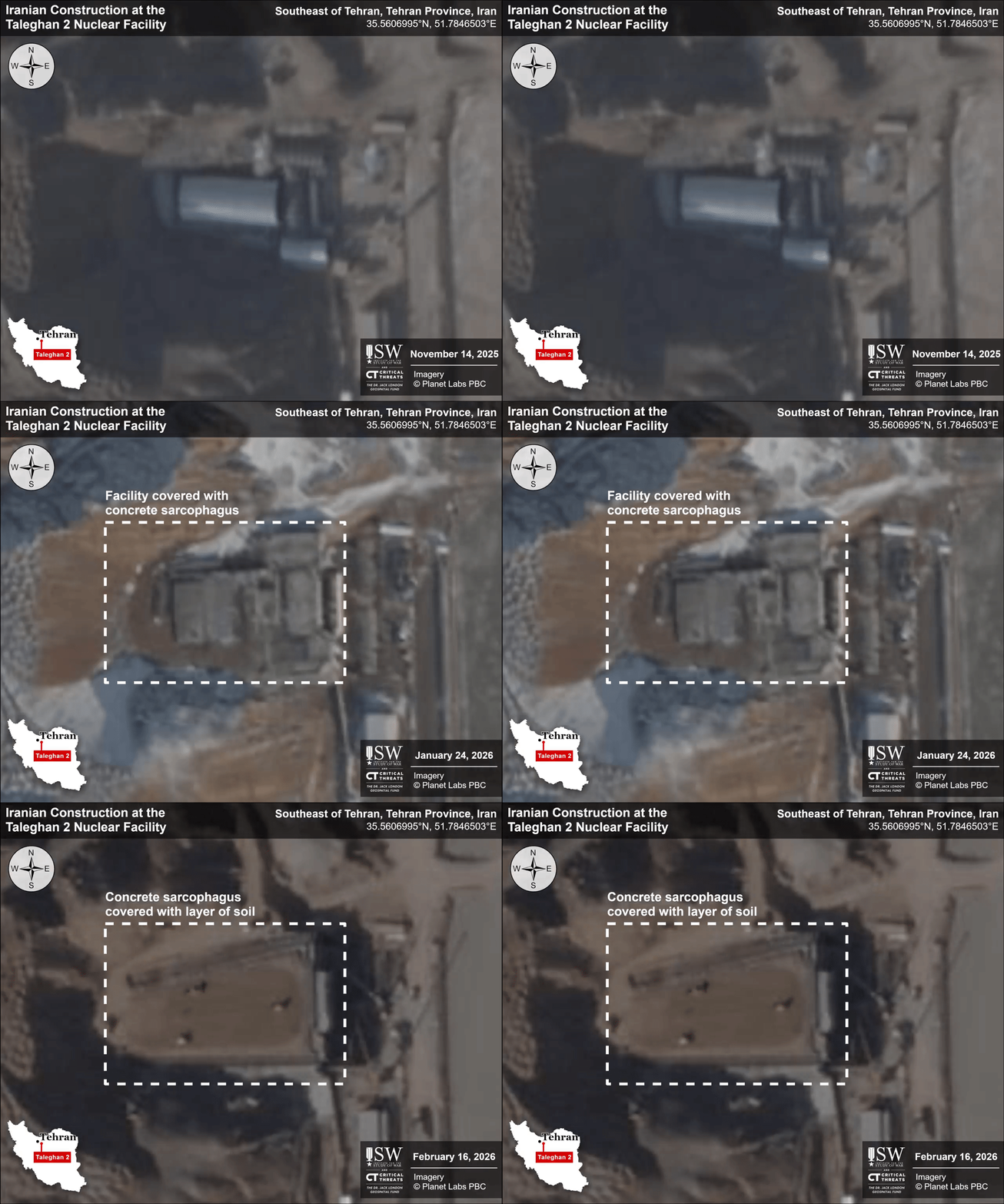

Actions speak louder than words & the Iranians are very clearly telling Washington that they have no intention of permanently abandoning their nuclear weapons program. Arguably, they likely have no short-term intention either even if they agree to a deal––meaning they would covertly subvert it.
Khamenei is speaking loudly too. In effect, he is daring Trump to attack Iran. His office released a short reel claiming that Iran has a weapon that can sink a warship. It begins with an image of the USS Gerald R. Ford in a watery grave.

Dictators love their wonder weapons. Never say never of course. Russia or China could have equipped Iran with Exocet-like weapons capable of sinking a warship. Ditto—perhaps—hypersonic missiles.
However, that is unlikely. If a Russian hypersonic missile sinks the USS Gerald R. Ford, Russian President Vladimir Putin knows Trump would dispatch U.S.-made Tomahawk missiles to Ukraine that are capable of hitting Moscow.
Likewise, if China were to similarly aid Iran, Chinese President Xi Jinping knows that it would—in all likelihood—come back to haunt him in Taiwan. The potential negatives simply outweigh the positives.
***
That said, as we enter the second half of this special edition, Long Month’s Journey into War of the INTREP360 Intelligence Report, we want to take some time to examine the potential repercussions of the U.S. going to war in Iran.
***
Actions create reactions. That simple aphorism—or a paraphrase of Newton’s Third Law of Motion for those of you who are physicists—is often at the core of analyzing U.S. national security & foreign policy decisions.
The U.S. striking Iran—likely—will create actions.
The scale & scope of those reactions—of course—will depend on the size & duration of any U.S. outbreak of war in Iran.
***
Russia—at least initially—could see the most immediate effects of U.S. strikes on Iran. If Khamenei falls—and that’s still a big if—then not only does Russia lose yet another of its Axis of Evil allies on top of Venezuela, but it also likely will result in the fall of Raúl Castro in Cuba sooner as opposed to later.
That would also mean—broadly speaking—the end of the last vestiges of Kremlin influence in Latin America.
It could also hit Putin in the wallet. More than 100 Iranian oil tankers are part of Russia’s shadow fleet illegally transporting Russian oil around the world. For now, oil prices have surged 4% helping indirectly Russia—they still have to sell at heavily discounted prices to evade U.S. & European sanctions.
That likely rapidly changes if the U.S. can topple Khamenei quickly. Nonetheless, if not quickly, then it would in the long run.
Either way, Putin would lose.
Falling oil revenues are already crushing Russia’s wartime economy. It is estimated that Moscow could be facing a drop of 18%. If that happens, Putin’s budget deficit could balloon to 4.4% of gross domestic product by the end of 2026.
Plus, if Khamenei falls, the Kremlin could lose a major military supplier. Since 2021, Russia has purchased or entered into co-production programs to purchase & manufacture nearly $5 billion of Iranian cruise missiles, ballistic missiles & ammo.
***
Beijing could be another big loser. In 2025, Beijing purchased more than 80% of all of Iran’s oil exports. According to Kpler—a real-time trading tool—that amounts to “around 1.3 million barrels per day” or nearly “14% of China’s total seaborne crude imports.”
That would be on top of China losing—at least temporarily—access to Venezuelan oil purchases after the capture by the U.S. of Venezuelan President Nicolás Maduro.
Never say never but China––militarily speaking––isn’t ready yet to forcibly invade Taiwan. If the U.S. is successful in quickly toppling Khamenei & his regime, that would enable Team Trump to pivot U.S. Navy assets into the Indo-Pacific.
If so, that could change Xi’s timetable & cost calculus when it comes to reunifying the two Chinas one way or the other. Of course, if the U.S. becomes bogged down in Iran, then that could work to Xi’s advantage.
***
To be clear, we are not trying to be Pollyannaish here. Our goal in writing today’s INTREP360 Intelligence Report was to highlight the cascading effect of any one given national security or foreign policy decision.
Negative outcomes are certainly possible too. As just one example before we close this edition out, if the U.S. succeeds in toppling Khamenei & the Islamic Republic of Iran is eliminated as a threat to the region, then the U.S. could find its influence waning in the Gulf States as they no longer would be as dependent on American firepower for defense.
***
Nonetheless, we are not there yet. Trump has yet to make a final decision despite all indicators suggesting that war is imminent.
Time will tell. Until then, this long month’s journey into war—or potentially into peace—continues unabated.
***
PROGRAMMING NOTE!
Tomorrow, at 7 AM ET, our weekly national security column at The Hill goes live. You can read it here once it does. We laud Zelensky for channeling his inner Brig. Anthony McAuliffe & telling Trump & Putin NUTS!
***
Thank you for reading! We will see you tomorrow. Please subscribe, comment and share. We truly appreciate it!
Jon & Mark
Follow Jon on X at @JESweet2022 or on Bluesky at @JonSweet.bsky.social.
Follow Mark on X at @MCTothSTL or on Bluesky at @MarkToth.bsky.social.
Please explain why Iran regime change would likely mean the same in Cuba...🤔
Great work, key details and updates in this report. Team Trump is likely looking for a swift decapitation strike combined with "kill or capture". The surge is a ruse. Not enough ground forces or political will for it. Insurgency is the only way to end this regime. Yet the US can "mow the grass".