

INTREP360 INTELLIGENCE REPORT
06.16.2026: Iran has an IRGC Problem


June 16th, 2026
Greetings!
As we wrote in The Washington Star on Monday – Tehran and Washington have an Islamic Revolutionary Guard Corps (IRGC) problem.
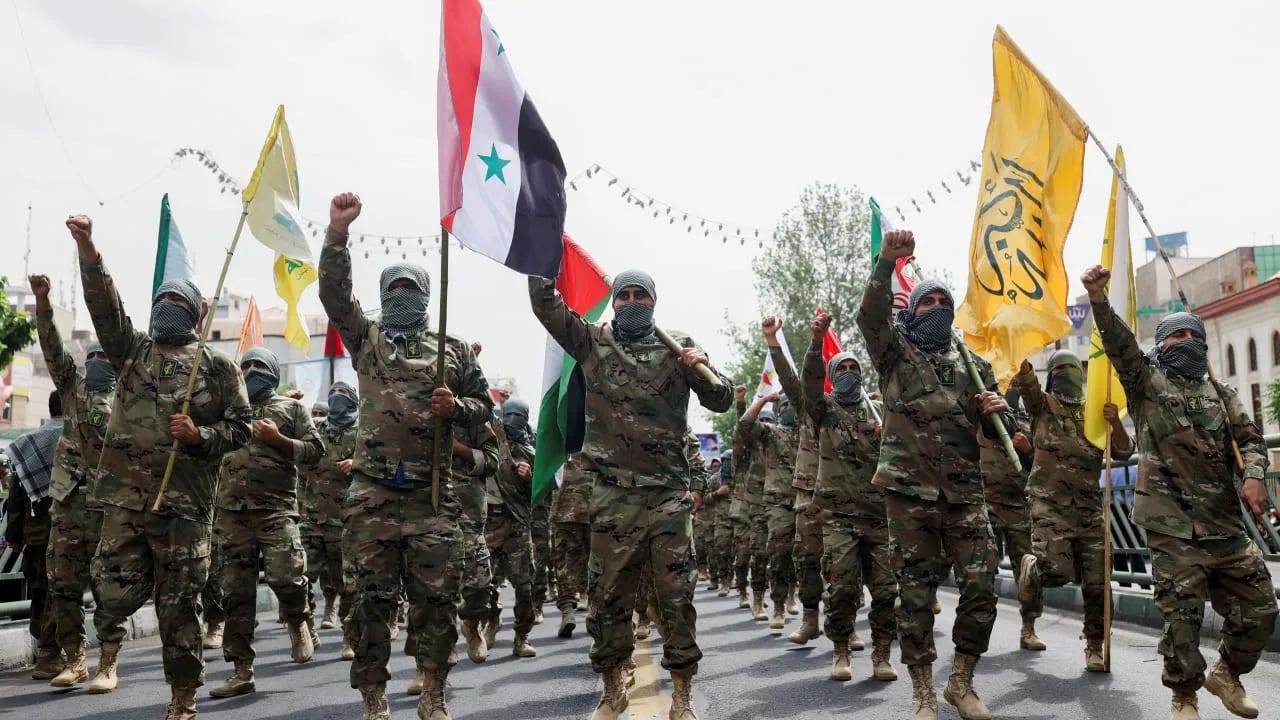
Photo Credit: MAJID ASGARIPOUR/WANA (WEST ASIA NEWS AGENCY) VIA REUTERS). Members of special IRGC forces attend a rally marking the annual Quds Day, or Jerusalem Day, on the last Friday of the holy month of Ramadan in Tehran, Iran, April 29, 2022.
The IRGC will do whatever it takes to undermine peace talks between the two countries. We saw that firsthand on Sunday.
President Donald Trump had announced on Truth Social that “The Deal with the Islamic Republic of Iran is now complete.” His next text added that “This Great Deal will bring Peace and Security to the whole Region.”
But Hezbollah got a different message from their handlers in Tehran – disrupt negotiations. Stir the pot. Create division between the two countries that allied with one another to attack their country on February 28th.
They did just that.
Less than 24 hours prior to the announcement, Hezbollah launched “three projectiles towards communities in northern Israel.” Israel - as anticipated - responded by attacking Hezbollah targets in Southern Lebanon.
In a joint statement released by Prime Minister Benjamin Netanyahu and Defense Minister Israel Katz, they stated that “The IDF has now attacked terrorist targets of the Hezbollah terrorist organization in the Dahiyeh neighborhood of Beirut, in response to Hezbollah’s firing into Israeli territory.”
As the saying goes, “Surprises are for birthdays.” Interestingly enough, Sunday was the President’s 80th birthday. An Ultimate Fighting Championship (UFC) event – UFC Freedom 250 – was scheduled to take place on the South Lawn of the White House. This was not on the schedule.
The exchange put Trump’s Deal at risk – and he was not happy, lashing out at Netanyahu, “I couldn’t believe it. An hour before we are supposed to sign the deal. Why did Bibi have to do a f***ing attack? I was so pissed off. I let him know. He has no f***ing judgement.”
The President gave Iran’s hardliners exactly what they wanted – division between the U.S. and Israel using Lebanon and their Hezbollah proxy as their tools. It’s not just Russian President Vladimir Putin who subscribes to Sun Tzu’s writings found in The Art of War: “Know the enemy and know yourself; in a hundred battles, you will never be defeated.”
The IRGC served as Tehran’s intermediary, just as they had done on October 7th when they orchestrated the attack on Israel utilizing their ‘other’ proxy in the region – Hamas.
Iran exports terrorism through their proxies via the IRGC. Iran’s hardliners are not going to relinquish that capability. As we have stated many times before - Iran’s center of gravity is the IRGC.
***
THE MEMORANDUM OF UNDERSTANDING
As the President pressed forward with his ‘Deal’ to reopen the Strait of Hormuz and ensure that Tehran does not secure or develop a nuclear weapon, he forwent Israeli national security interests.
While Israel shares the nuclear capable Iran red-line, the wolf closest to their sled is Hezbollah – who sits atop their list, alongside Hamas, Houthi rebels, and Iran’s ballistic missile and drone programs. The asymmetric threat.
Jointly the allies entered into the war with Iran with a singular goal: regime change. The two leaders acknowledged as much in their statements:
On the evening of the strike on Supreme Leader Ayatollah Ali Khamenei’s compound in Tehran, Trump encouraged the Iranian people, telling them that “the hour of your freedom is at hand … take over your government.”
Two weeks later, Netanyahu told Israeli citizens that his goal was “to create the conditions for the Iranian people to overthrow this terrible tyrannical regime,” telling Iranians “Its up to you.”
When that did not materialize – the President sought an alternative path for peace. At D+38, he stopped the bombing and chose to enter into negotiations with Iran for a cease fire. Iran played the only card they had left – they shut down the Strait of Hormuz.
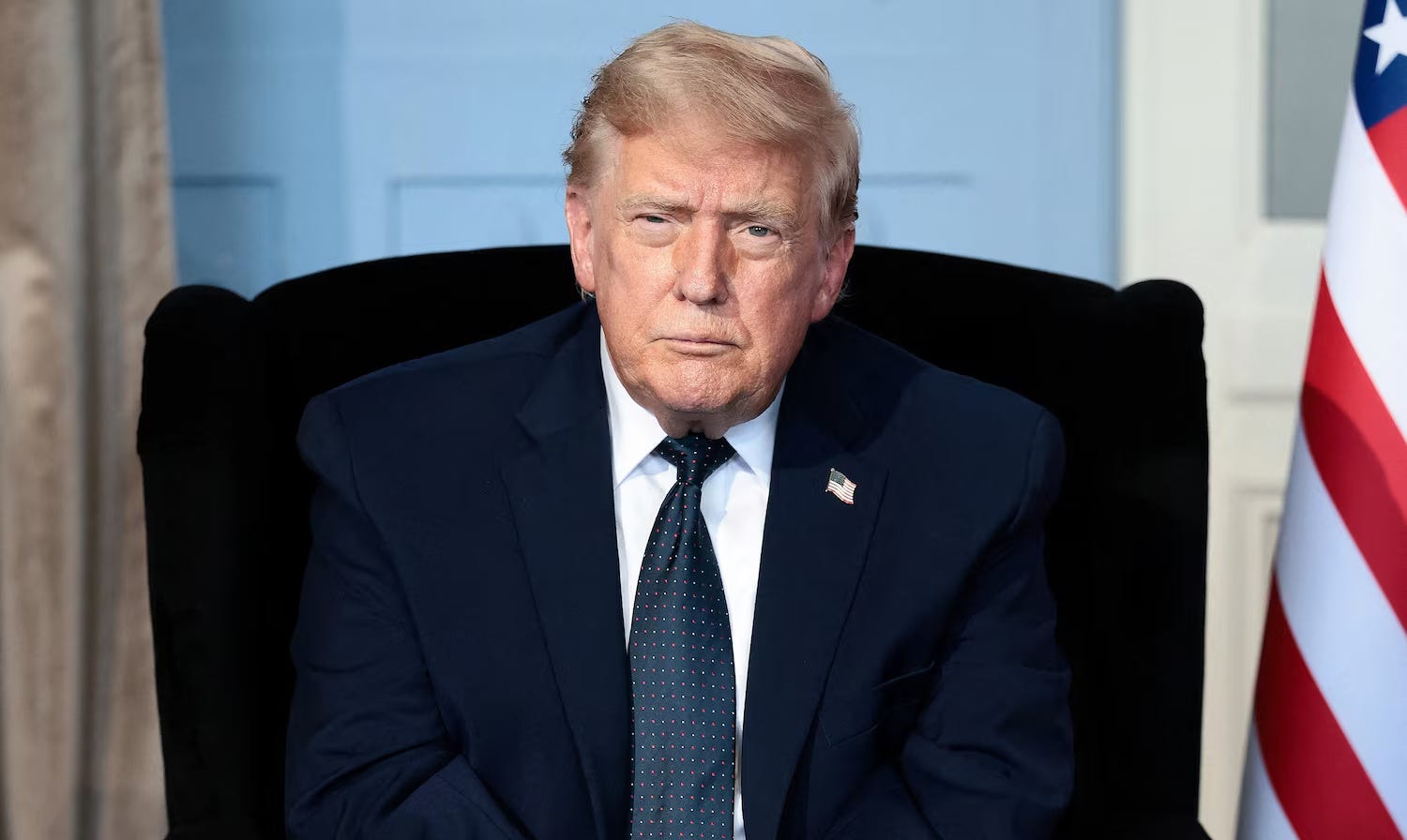
Photo Credit: Evelyn Hockstein/Reuters. President Donald Trump speaks as he attends a bilateral meeting with French President Emmanuel Macron during the G7 Summit in Evian-les-Bains, France, June 15, 2026.
While the actual terms of ‘The Deal’ the President signed on Monday remain undisclosed, Iran published their version of the 14-point Memorandum of Understanding (MOU) online. The first demand listed calls for the “immediate and permanent cessation of this war on all fronts, including in Lebanon.”
That is not going to happen. Not as long as Hezbollah and their IRGC ‘advisors’ remain in Lebanon and the Gaza Strip.
A spokesman from Netanyahu’s office said Israel will continue to defend itself against any threat to its security. Katz added on Monday that Israel would not withdraw from the land it seized in Lebanon, making it clear that Israel joined the U.S. in the war with Iran, but was not party to Trump’s ‘Deal.’
Two other points in the MoU stood out as well:
7. Reconstruction plans to be presented by the US and its allies, totaling at least $300 billion.
11. Release of $24 billion in Iran’s blocked funds during the 60-day final negotiation period, with half of that amount to be made available to Iran before negotiations begin.
The MoU contains no mention of support to Iran’s proxies or their ballistic missile and drone programs. Israel knows a sizable portion of that $324 billion – whether the U.S. contributes or not – in reparations and frozen funds will be allocated back to the IRGC to rebuild their proxy network and their ballistic missile and drone inventories. And that does not even take into consideration the funds they will generate from their own oil sales over the 60-day ceasefire timeline.
On Sunday, Vice President J.D. Vance told Fox News that “If the Iranians comply with this deal [MoU], it is going to fundamentally transform the Middle East for the next 50 years … it is going to end the war.”
That’s a pretty big IF – considering what was conveniently left out of the MoU. But it did not go unnoticed by Israel.
Iran will comply with the deal – more appropriately, take advantage of it – as long as it serves its needs. For now, that need is cash – and Trump’s deal provides that in bulk.
***
VAHIDI’S PLAN
In 1976 The Steve Miller Band released their hit song “Take the money and run.” And that’s the most likely course of action for Iran at the moment.
At least according to one source close to the IRGC, who told Israel’s Channel 14 Senior Iran Analyst Dror Balazada that the IRGC has no intention of honoring the deal. Brig. Gen. Ahmad Vahidi allegedly stated, “We’re not really trying to uphold it [the deal]; we just want the money we’ll get from it … Let’s take all the money right now, and then we’ll do whatever we want.”
***
THE WAY AHEAD
The President made a number of disingenuous comments about Israel today in Geneva at the G7 Summit. Israel is not an adversary; rather, they are an ally. Lebanon is not a threat either – Hezbollah’s occupation and its subsequent militarization of Lebanon is. Lebanon became a training ground for IRGC forces – and their sanctuary.
United Nations Security Council Resolution 1701 was supposed to provide a solution in 2006. But like many U.N. Resolutions, it was not enforced. It briefed well, but no one – neither the Lebanese Army nor U.N. Forces – wanted to stand up to Hezbollah.
Israel will become an obstacle to Trump’s ‘Deal’ if he permits Iran – through the IRGC and its proxies – to continue to threaten Israel’s national security.
On Monday Netanyahu said the agreement between the U.S. and Iran was Trump’s decision, Israel has its own interests, “I tell you, citizens of Israel, the struggle is not over. We will need to continue to be vigilant, to remain strong and determined, to defend ourselves as necessary.”
According to the Fars News Agency – the U.S. promised Iran that Israel will withdraw from Lebanon. Trump made a similar promise to Putin in Alaska – Zelensky will withdraw from the Donbas. How did that work out?
The IRGC is the problem – the head of the Hydra. And its leader – Vahidi – now runs the country as well. His track record is evidence enough.
To achieve peace in the Middle East, the President must address Israel’s national security concerns. If not, Iranian hardliners will continue to leverage IRGC capabilities to achieve their ends. Allowing the IRGC to remain in power will not bring peace to the Middle East; rather, it will destabilize the region for the foreseeable future.
***
ICYMI. In our national security column in The Washington Star today we compare the Witkoff & Kushner approach to negotiations between Russia and Iran. The ‘deals’ the pair negotiate tend to revolve around money – while leaving allies to fend for themselves.
***
Thank you for reading. We will see you tomorrow. Please subscribe, comment & share. We truly appreciate it!
Jon & Mark
Follow Jon on X at @JESweet2022 or on Bluesky at @JonSweet.bsky.social. Follow Mark on X at @MCTothSTL or on Bluesky at @MarkToth.bsky.social.
I already feel sorry for the next President of the USA !
The chaos left by Taco will leave traces for decades.